

ACME Environmental training and containment boom deployment school hazwoper training refresher boom school

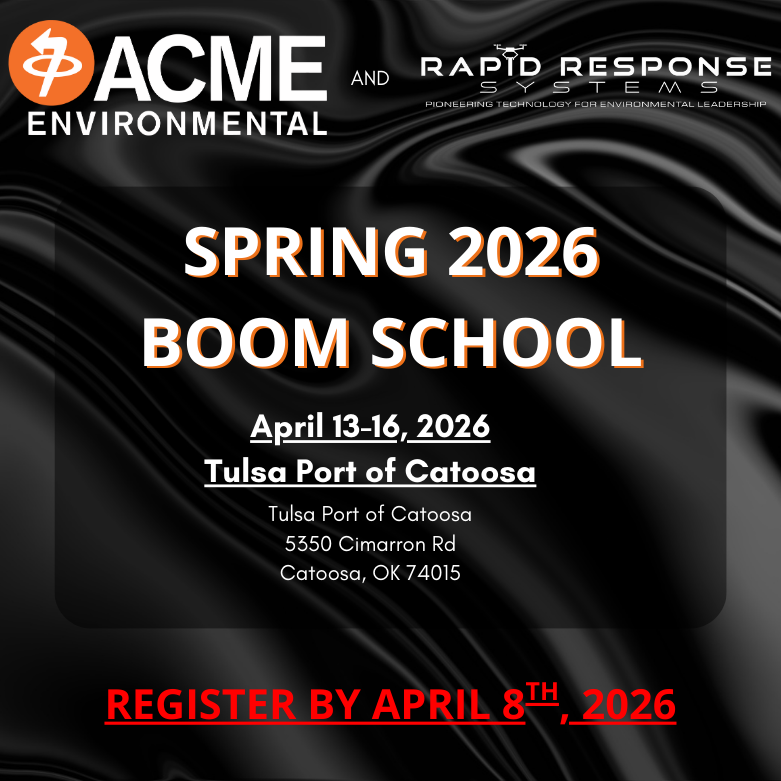
Boom School – Spring 2026

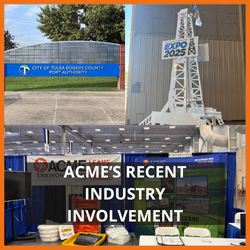
ACME Environmental and Rapid Response Systems are hosting a four day boom school at the Tulsa Port of Catoosa, October 27-30th, 2025. This hybrid course will incorporate both classroom and field training utilizing successfully proven deployment and response tactics and strategies. Students will learn the best practices for utilizing the latest solutions by using mixed technologies to produce better incident action plans in an event, improve communication, and strengthen their ability to execute their current preplanned response strategies. Don't miss out, register your team today!

Insights

ACME Environmental training and containment boom deployment school hazwoper training refresher boom school

Boom School – Spring 2026

ACME Environmental and Rapid Response Systems are hosting a four day boom school at the Tulsa Port of Catoosa, October 27-30th, 2025. This hybrid course will incorporate both classroom and field training utilizing successfully proven deployment and response tactics and strategies. Students will learn the best practices for utilizing the latest solutions by using mixed technologies to produce better incident action plans in an event, improve communication, and strengthen their ability to execute their current preplanned response strategies. Don't miss out, register your team today!
  • Insights

  • Thumbnail for article reviewing the oil spill in the Tangipahoa River

    Tangipahoa River Oil Spill

    Following the explosion and subsequent fire at Smitty’s Supply in Roseland on August 22, black, oily runoff containing unknown chemicals has seeped into the Tangipahoa River, raising serious concerns about long-term environmental damage and potential repercussions for Lake Pontchartrain. The contaminants, which emit an odor similar to asphalt, became visible over 40 miles downstream within just a few days of the incident. The U.S. Environmental Protection Agency (EPA) is leading cleanup efforts, deploying more than 14,000 feet of oil spill containment boom and thousands of absorbent pads. However, local residents and environmental groups argue that these containment boom systems are primarily designed for oil and are failing to contain the hazardous mixture of chemicals, firefighting foam, and oily residue that is leaking into the river. Black, tar-like substances have been spotted washing ashore, coating logs and vegetation along the banks.

  • Article over ACME's custom baffle solutions for water treatment plants

    ACME’s Custom Baffle Solutions

    ACME Environmental's custom floating baffle systems play an essential role in the operations of water treatment facilities. These innovative systems address numerous challenges that can arise within treatment ponds, water basins, and cooling systems. By strategically managing water flow and enhancing sediment control, the baffle systems help mitigate potential issues, ensuring the efficiency and effectiveness of treatment processes. This approach not only prevents complications from developing later but also contributes to a more reliable and sustainable water management solution.

  • Thumbnail for article explaining the 5 types of oil barriers that many company inventories are missing

    5 Types of Oil Barriers Your Inventory Is Missing

    When it comes to responding to oil spills, having the right oil spill barrier is crucial. However, many organizations unknowingly leave gaps in their preparedness by only maintaining inventories of general-use regular oil spill containment boom. Oil spills come in various forms and occur in different environments, from catastrophic tanker accidents offshore to small-scale runoff in inland streams. To effectively safeguard ecosystems, communities, and infrastructure, it is crucial to include different types of oil spill containment boom in your inventory that are designed for a range of conditions and challenges. Ensuring that your inventory of oil spill equipment addresses multiple aspects of oil spill response is key to staying ahead of the game and always being prepared.

  • Oil spill on beach that needs to be cleaned up

    Your Guide to Oil Spill Cleanup

    Before an oil spill happens, it is crucial to establish clear response protocols that enable swift and effective response efforts. Having the proper oil spill containment equipment readily available is equally important to ensure successful oil spill cleanup efforts. Responding to an oil spill is not optional; it is federally mandated for protecting our environment and preserving marine ecosystems. The party responsible for the oil spill is both legally and ethically obligated to act quickly and take immediate action once the incident occurs.

  • How ports and terminals should plan ahead for an oil spill response

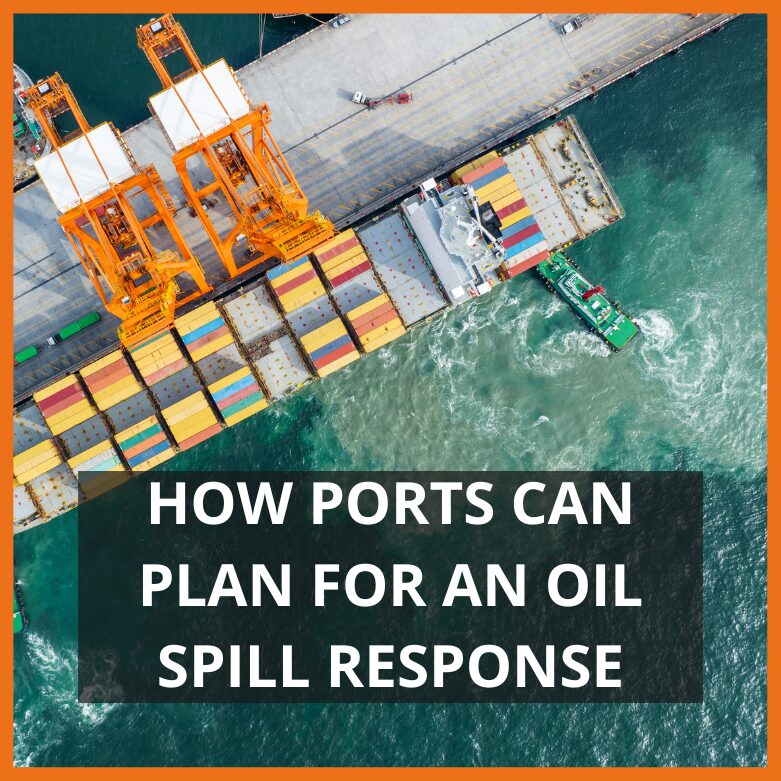
    How Ports Can Plan for an Oil Spill Response

    Preparedness for oil spills is not just important, it is essential. For ports and terminals, having a well-structured, comprehensive oil spill response plan is critical to protecting the environment, safeguarding economic interests, and preserving your organization’s reputation. In today’s regulatory landscape, compliance is not just a requirement; it is a clear demonstration of your commitment to environmental responsibility and operational safety.

  • How Refineries Can Prepare for Hurricane Season

    How Refineries Can Prepare for Hurricane Season

    Hurricane season has officially begun, and the need for preparation is here, not just for families and cities, but also for refineries, chemical plants, and other industrial operations located near the coast. Storms do not wait, and when they hit, they bring more than just wind and rain. Flooding, power outages, floating debris, and hazardous spills can quickly turn into environmental disasters if proper precautions and response strategies are not in place. According to the NOAA, they project that this hurricane season can produce between 13 and 18 storms, of which 5 to 9 are likely to reach hurricane strength; this includes 2 to 5 storms reaching a Category 3 rating or higher.

  • ACME's GAC Trailer, Granular Activated Carbon Trailer In Action

    ACME’s GAC Trailer

    When time, compliance, and cost are on the line, you need a treatment solution that works fast and works where you are. ACME Environmental’s Granular Activated Carbon (GAC) Filtration Trailer puts industrial-strength water treatment directly in your hands. This mobile unit is built to handle high volumes of contaminated liquids with precision and efficiency, eliminating the need for off-site disposal. With advanced carbon filtration technology and a rugged design, it is an affordable solution for environmental professionals tackling tough jobs like groundwater remediation, UST cleanups, wastewater filtration, and more. Whether you are working under regulatory pressure or strict timelines, ACME’s GAC trailer delivers the performance you need, right when you need it.

  • Boom School, Boom Deployment, Hazwoper, Containment Boom

    Spring 2025 Boom School – Training the Next Generation of Spill Responders

    As the emergency response industry continues to evolve, each new challenge becomes an opportunity to improve. In response to these changes, ACME Environmental and Rapid Response Systems offered a four-day Boom School from April 7–10, 2025. This boom deployment course provided emergency responders with the latest technologies and strategies to enhance situational awareness and decision-making. The hybrid course combined classroom instruction with field training exercises, incorporating proven deployment and response tactics alongside emerging technologies and systems relevant to today’s industry. During this boom school, students learned the best practices and the latest solutions to develop better incident action plans (IAP’s), incident command posts (ICP’s), improve communication, and strengthen their ability to execute current preplanned response strategies.

  • How To Combat The Sargassum Invasion

    How To Combat The Sargassum Invasion

    Research is showing that massive layers of Sargassum in the Atlantic will invade many coastal regions in 2025. Maps are showing clouds of Sargassum approaching the Caribbean Sea, the Gulf of Mexico, and northern parts of South America at a rapid pace and are washing up on shores daily. Sargassum is a type of brown seaweed that floats in massive quantities across the ocean, often washing up along coastlines. While it plays a vital role offshore for marine ecosystems by providing a habitat and food for various marine species, excessive sargassum accumulation on beaches can become a major issue.

  • ACME Environmental's partnership with ISNetworld for 19 years

    ISNetworld 19 Years Certification

    ACME Environmental is proud to announce 19 years of partnership with ISNetworld, highlighting our dedication to safety, compliance, and the well-being of our clients and employees. This membership with ISNetworld underscores our commitment to not only meet but also exceed industry safety standards, ensuring that we align with our clients’ protocols for a secure and efficient work environment.

  • ACME well maintenance service offerings

    Well Maintenance Service Offerings

    Beyond spill response, we provide comprehensive well maintenance services to ensure the continued integrity and efficiency of well sites. Our team specializes in well maintenance, remediation, restoration, and oil spill response helping clients address potential contamination risks. We utilize state-of-the-art remediation techniques to guarantee a thorough and environmentally friendly cleanup process. Our skilled workforce, comprised of certified professionals with extensive training in spill response and strong business relationships in environmental science, allows us to deliver tailored solutions that meet the unique challenges of each situation.