


Turbidity Curtains & Sediment Control
What Is the Importance of a Turbidity Curtain? When construction, dredging, shoreline development, pipeline installation, bridge work, or other industrial...
Read MoreWinter introduces unique challenges for industrial facilities, environmental contractors, and emergency response teams, making oil spill equipment readiness especially important. Freezing temperatures, snow accumulation, ice formation, and unpredictable weather can compromise equipment condition, accessibility, and performance. Oil spill equipment that performed reliably during warmer months may not be ready for immediate deployment after exposure to changing weather conditions. Hoses can become brittle, containment boom and their components can deteriorate, moisture trapped inside equipment can freeze, and outdoor storage areas can become difficult to access or no longer be suitable for protecting equipment. For facilities operating near waterways, pipelines, fuel storage areas, or industrial drainage systems, these issues can create additional complications during an already time-sensitive emergency. When winter weather is involved, response teams may already be dealing with hazardous travel conditions, frozen waterways, limited site access, and slower deployment operations. Equipment failure should not be a factor when responding to a spill.
This is a main reason why the U.S. Environmental Protection Agency (EPA) emphasizes the importance of maintaining effective oil spill prevention and preparedness programs. Its Oil Spill Prevention and Preparedness Guidance provides resources for facility owners and operators, including guidance on inspections and spill prevention planning. The takeaway is simple: spill response equipment should be inspected and maintained year-round. When a spill occurs, equipment needs to be ready to deploy immediately, not after crews discover frozen components, damaged materials, or missing accessories.
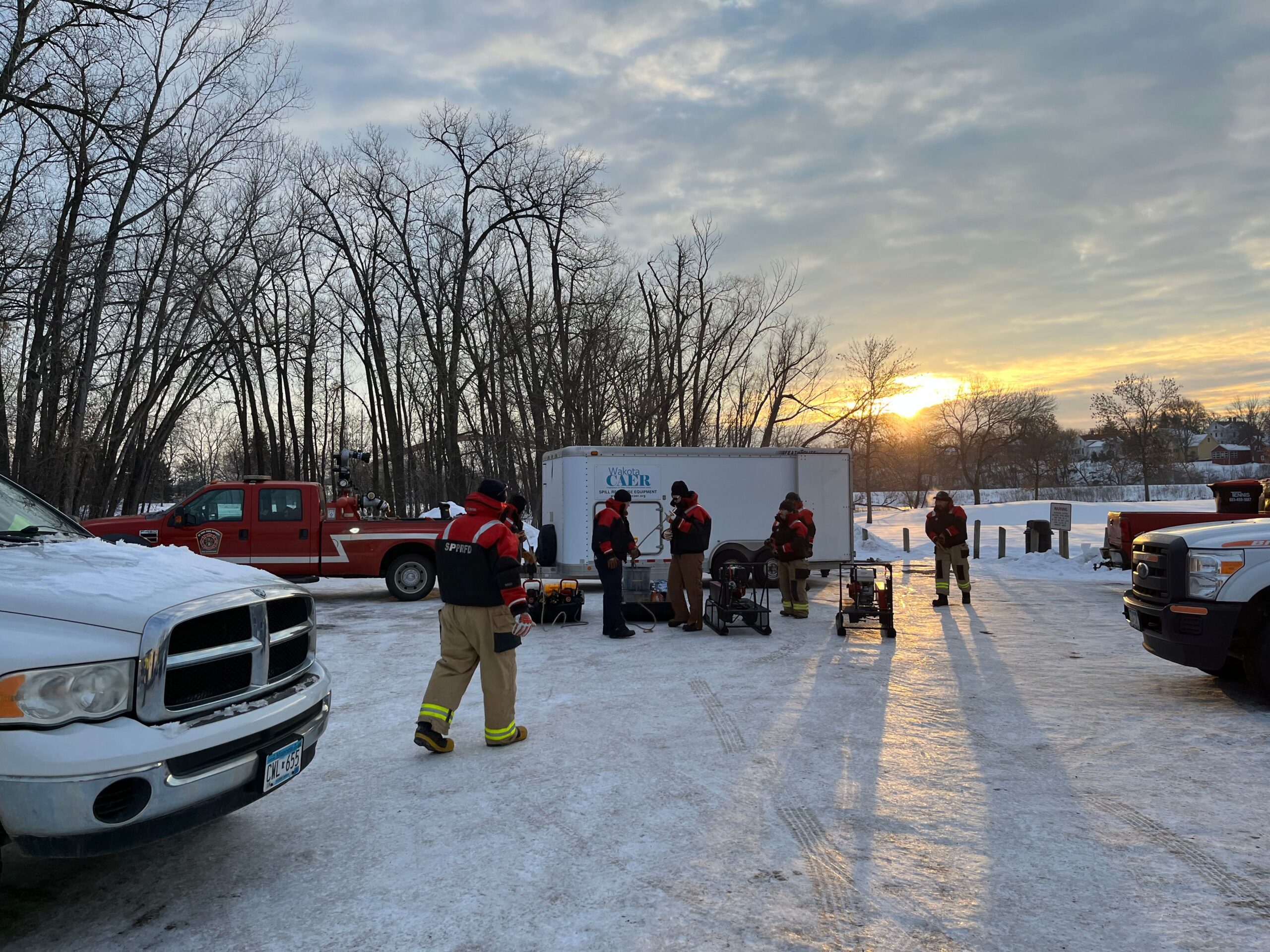
Response trucks and trailers equipped with all necessary equipment for a cold weather response
A comprehensive inspection should evaluate the condition, functionality, and availability of all equipment that may be needed during a spill response. This includes, but is not limited to, containment boom, accessories, pumps, hoses, oil skimmers, and absorbent materials. Cold weather makes routine inspections even more important. Materials can become brittle, seals and connections can deteriorate, and moisture can freeze inside mechanical equipment. Components that appear functional during a visual inspection may still fail when exposed to freezing temperatures or placed under the demands of an actual deployment. At ACME Environmental, we conduct monthly equipment inspections to maintain compliance with United States Coast Guard (USCG) requirements as a #0010 Oil Spill Removal Organization (OSRO). These inspections help us evaluate equipment condition, identify maintenance needs, and maintain the operational readiness required to respond 24/7/365. Preparing for winter is not simply about having equipment available; it is about knowing that it will perform when conditions are at their worst.
Containment boom is one of the most important tools used during an oil spill response. Its purpose is to contain or redirect floating contaminants, helping prevent their spread and allow recovery operations to take place. However, extended exposure to environmental conditions due to improper storage and repeated use can affect the condition and performance of a containment boom. Extreme cold adds another consideration. Depending on the materials and construction, freezing temperatures can reduce fabric flexibility, make certain components more susceptible to damage during handling, and place additional stress on seams, connections, attachment points, and hardware. Equipment that is already worn or damaged may be even more vulnerable under these conditions.
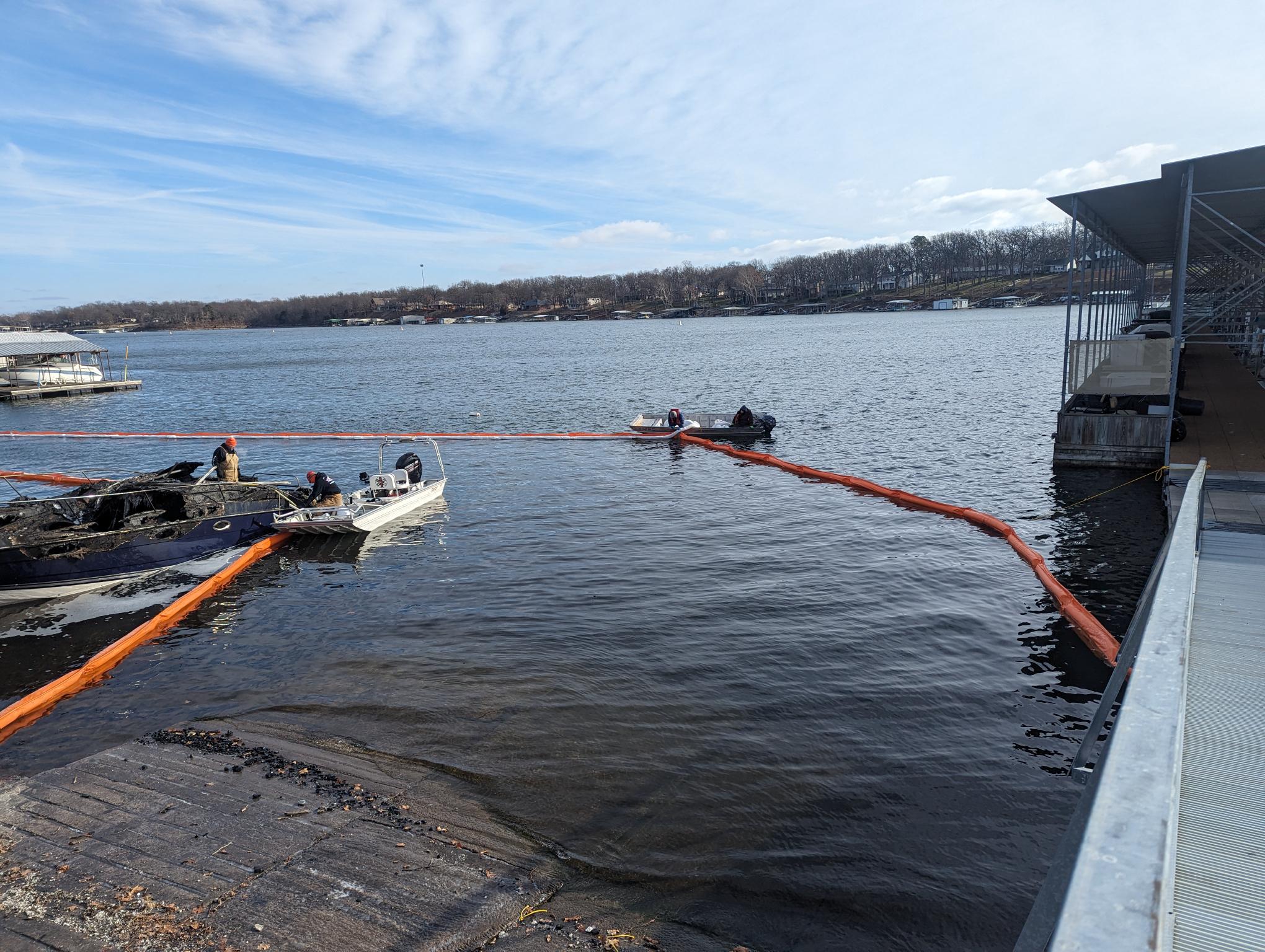
Containment boom being deployed around a boat that caught on fire in the winter
Pay particular attention to connection points between individual boom sections. Even when the boom fabric itself appears to be in good condition, damaged/incompatible end connectors or missing hardware can prevent sections from being properly assembled during deployment, causing an even bigger issue when material that is supposed to be contained escapes the containment system. Cold temperatures can make handling and connecting equipment more difficult, making it especially important to identify these problems before an emergency. At ACME Environmental, we manufacture containment boom in-house using a variety of durable fabrics and hardware designed to provide resiliency and structural integrity in harsh environments. Maintaining the condition of these materials and their associated components is essential to ensuring they are ready when needed. Learn more about ACME’s Containment Boom and Containment Boom Accessories.
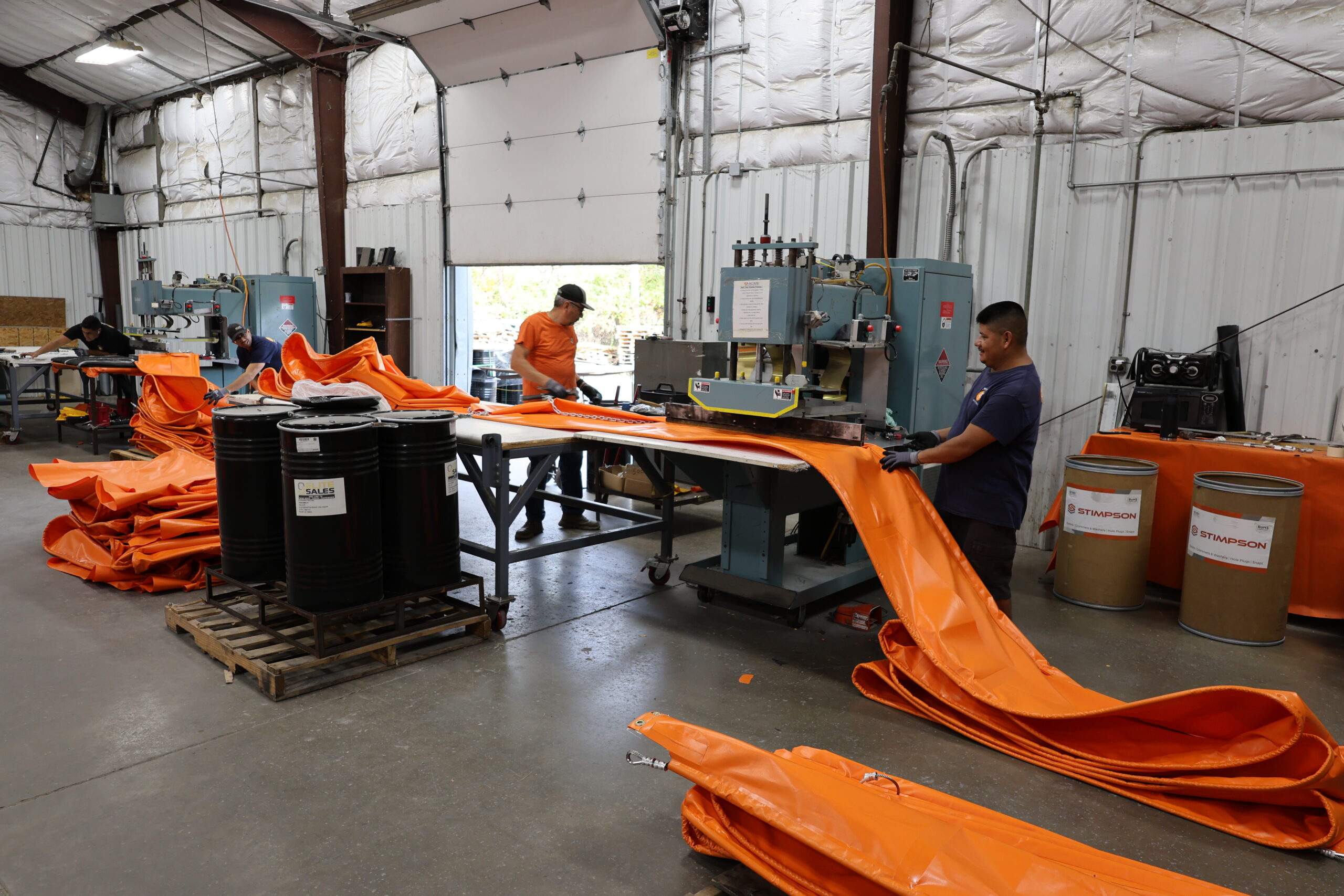
ACME employees manufacturing containment boom
Containment is only one part of a successful spill response. Once contaminants have been contained, recovery equipment must be available to remove and collect the material. Skimmers, power packs, hoses, and other equipment should be inspected before operations begin. Cold temperatures can create problems throughout these recovery systems. Hoses may become less flexible and more susceptible to cracking, seals and fittings can be affected by extreme temperature changes, and batteries may experience reduced performance. Additionally, water left inside pumps, hoses, or oil skimmer components can freeze, potentially damaging internal components or preventing equipment from operating altogether.
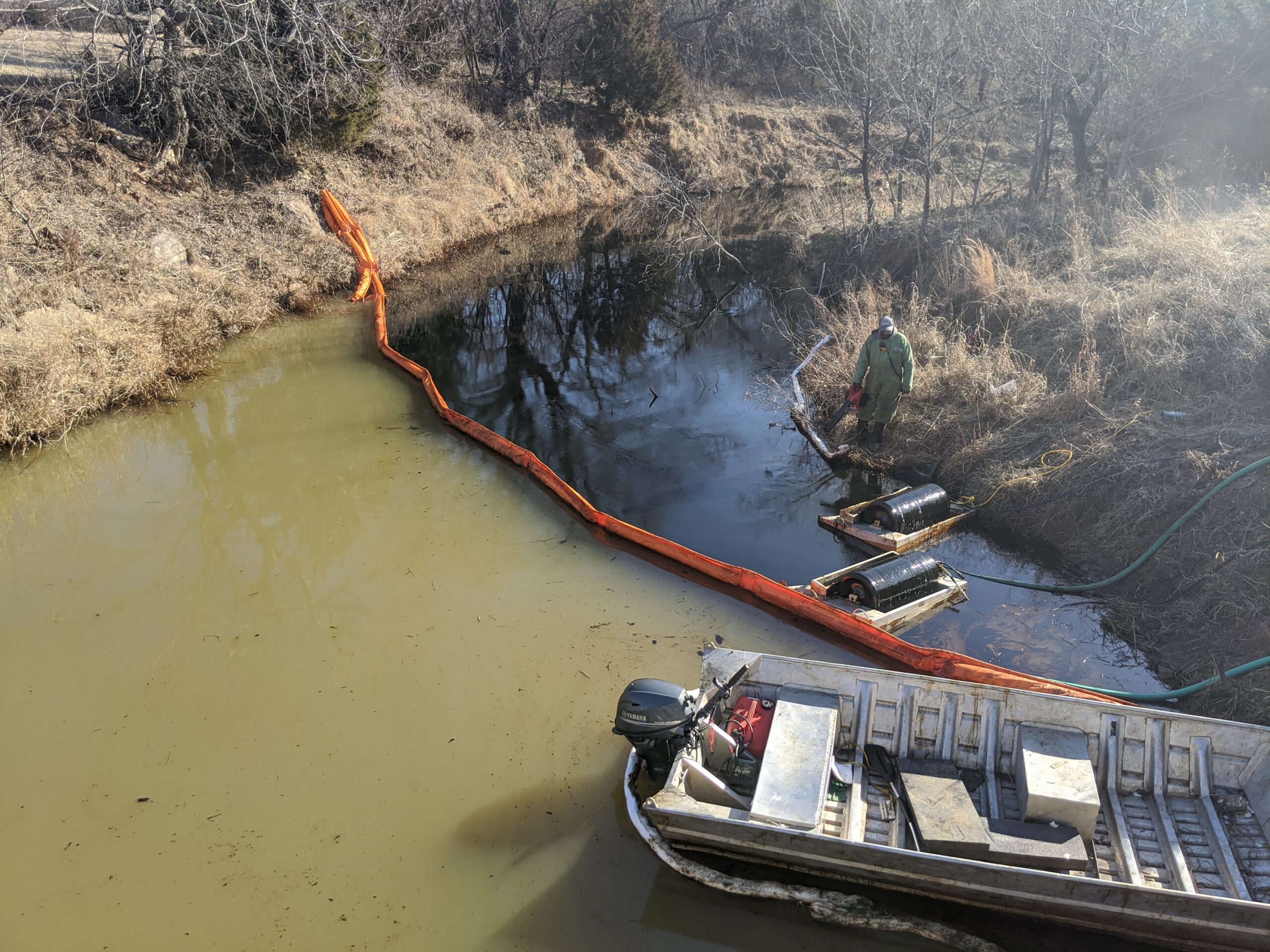
Containment Boom deployed to prevent spread of oil while an Oil Skimmer removes oil off the water surface
At ACME, these inspections allow us to evaluate the condition and effectiveness of all our recovery equipment. For example, inspecting the motors and oleophilic fibers on our oil skimmers helps us ensure they continue to perform as intended. By routinely testing and maintaining our equipment, we help identify potential issues before they become problems and ensure our skimmers are ready when an emergency response requires them. When crews are working in freezing conditions, there is little room for equipment troubleshooting or unexpected failures. That’s why we always operate by this one rule: inspecting equipment monthly and keeping multiple units of all necessary equipment on hand at any given time. This includes, but is not limited to, replacement skimmer heads, extra hoses and fittings, motors, power packs, and compressors. Explore our oil spill skimmers and contact our team to discuss your equipment needs.
Spill kits are often the first resource people reach for when responding to smaller releases. However, their usefulness depends on having the correct materials available and in usable condition. A spill kit that is missing critical absorbent material fails to do its job: contain and clean up a smaller release before it becomes a bigger problem. Winter weather can make these smaller incidents more difficult to manage. Snow and ice can complicate access to a spill, while freezing temperatures can affect the handling and condition of certain cleanup supplies and spilled material. Spill kits stored outdoors or in unconditioned areas may also be exposed to moisture, damaged packaging, or other conditions that compromise their contents.
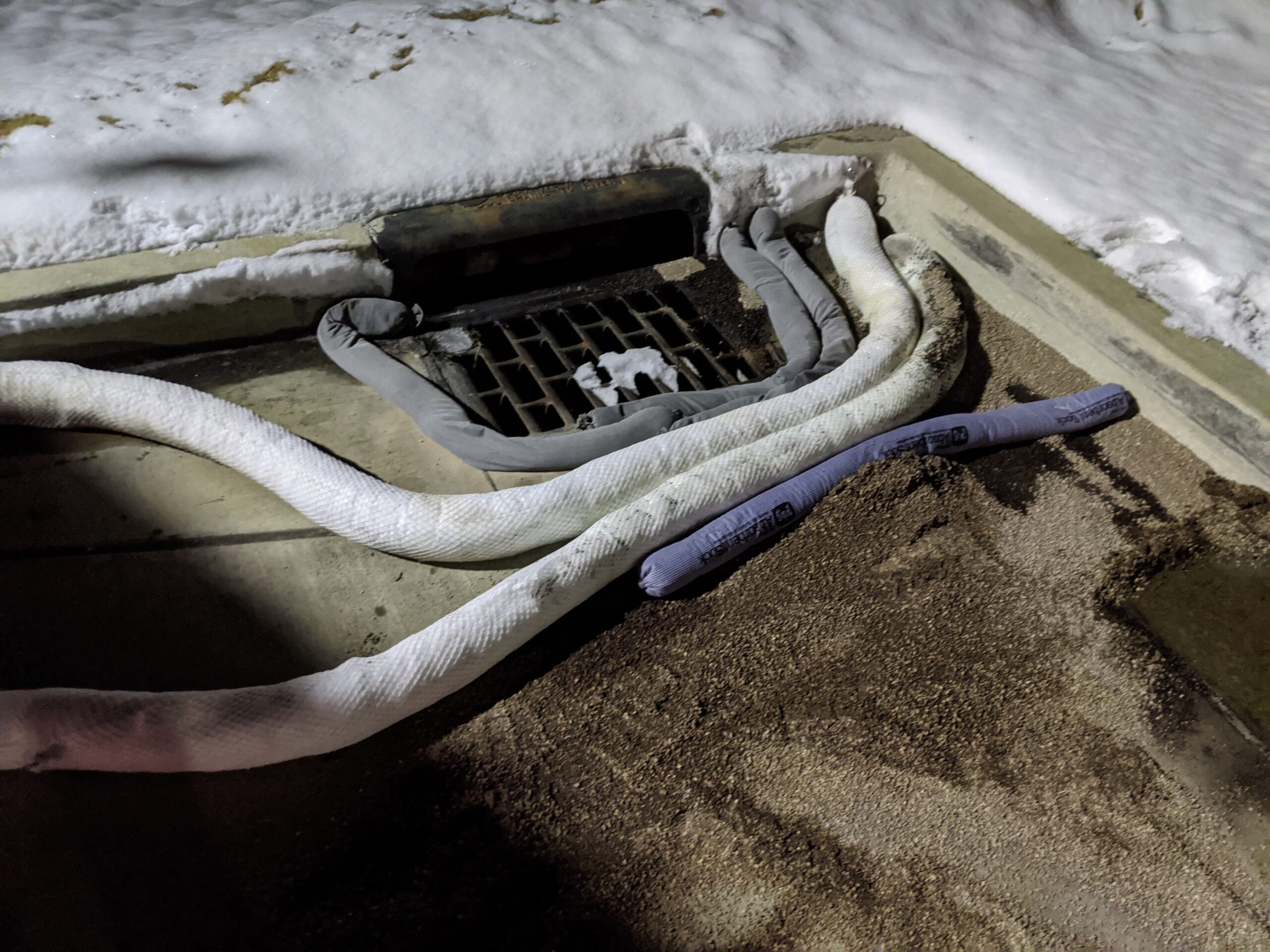
Absorbent boom, absorbent sock, and granular absorbent keeping spilled oil from entering a storm drain
Check that packaging remains intact and that absorbent materials have not been damaged or contaminated during storage. It is also important to verify that the materials are compatible with the petroleum products or chemicals your facility handles, as not every absorbent is suitable for every type of spill. Consult the manufacturer’s guidelines to confirm the correct absorbent is selected for the substances being managed. Winter storage conditions require additional attention as well. Keep spill kits protected from excessive moisture and extreme temperatures, and make sure they remain accessible when needed. Snow and ice around storage areas can make equipment difficult to reach, so plan ahead to ensure kits are readily available during an emergency.
Don’t wait until a spill occurs to discover your spill kit is missing essential supplies or is not readily available. ACME Environmental offers a variety of spill kits and absorbent products to help keep your facility prepared. Explore our product selection and make sure you have the right materials ready when you need them.
Since ACME’s founding in 1967, ACME has learned that one of the most overlooked aspects of spill response preparedness is equipment inventory management. A facility may have thousands of feet of containment boom in storage, but that doesn’t necessarily mean it has everything needed to deploy it effectively. Missing connectors, damaged hardware, incompatible boom sections, or insufficient anchoring and towing equipment can create significant delays during an emergency. Winter conditions make these inventory gaps even more problematic. Snow and ice can restrict access to stored boom, while freezing temperatures can make field assembly and handling more difficult. When crews are already working against weather-related delays, discovering missing deployment accessories can create a setback that was preventable.
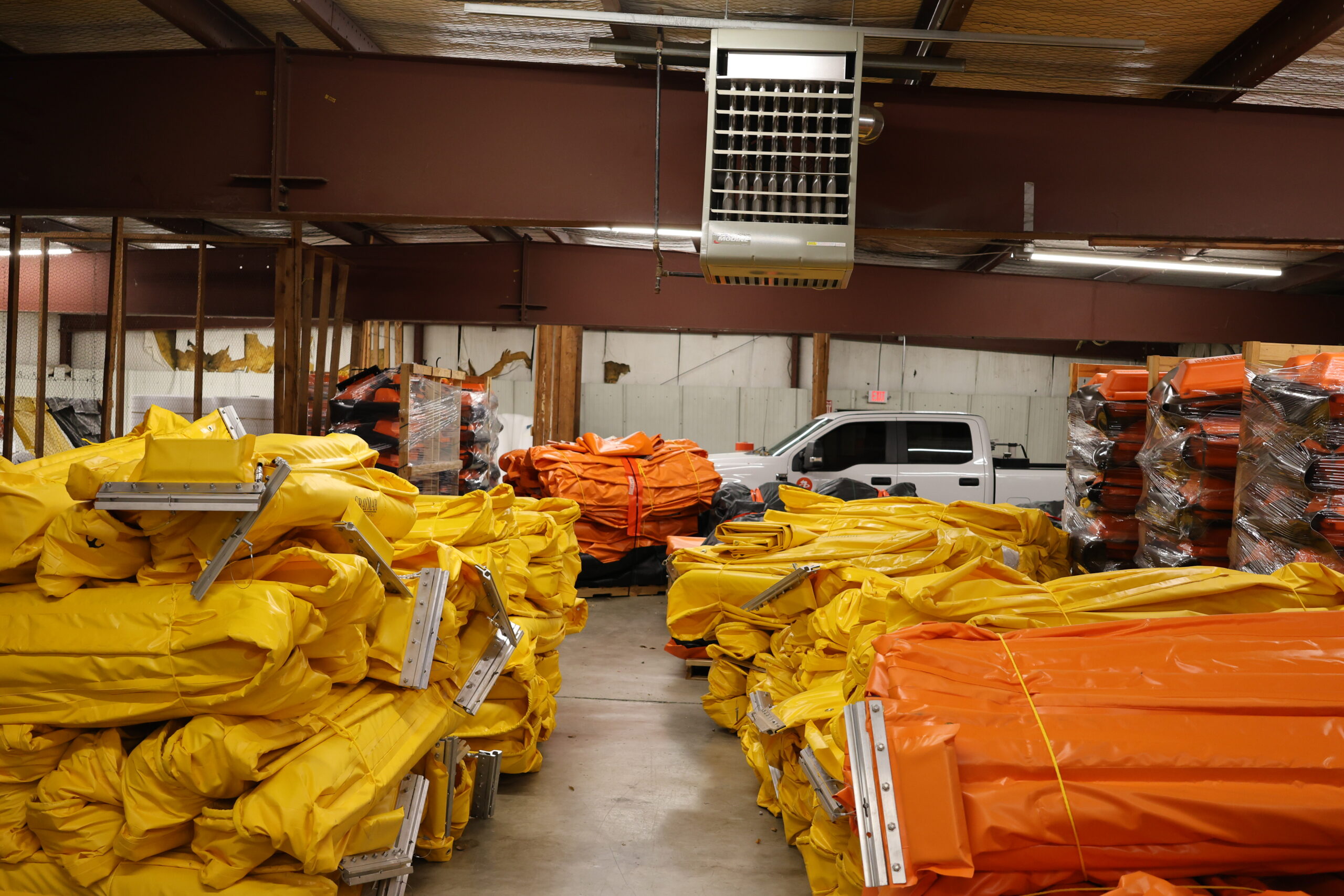
ACME Environmental’s shop full of containment boom ready to be used
For containment boom specifically, operators should verify that all individual sections can be connected properly and that all required deployment accessories are available. Two commonly overlooked items are anchor systems and towing bridles, which are essential for properly positioning, securing, towing, and deploying containment boom. At ACME Environmental, we make a point to keep anchor systems and towing bridles on hand as part of our own response equipment inventory. We recommend that facilities and other response organizations do the same. Having these accessories readily available is especially important during extreme weather, when limited daylight, freezing temperatures, and difficult working conditions leave little room for unnecessary delays. A well-maintained inventory helps ensure equipment is not only available but also compatible, functional, accessible, and ready for deployment 24/7/365.
Since 1967, ACME Environmental has manufactured and supplied oil spill containment products. With decades of experience in equipment manufacturing and responding to spills, ACME understands that effective spill preparedness requires more than having the right products on hand. It also takes experienced personnel, dependable equipment, and the ability to respond when conditions are at their worst.
ACME offers a wide range of products designed to support spill prevention, containment, and recovery operations, including:
Oil Spill Containment Boom: Available in different configurations for inland and nearshore, offshore, and specialized containment applications. All of our containment boom options are fully customizable to meet site-specific needs.
Containment Boom Accessories: Fabric repair kits, anchor systems, towing bridles, tide risers, boom marker lights, and other essential accessories are available to help reinforce a facility’s inventory.
Boom Reels: These are designed to simplify boom handling, storage, and deployment. Boom reels can store thousands of feet of containment boom; they can either be manually or hydraulically driven, and come in all shapes and sizes. These are especially helpful in protecting containment boom from harsh weather conditions because they can be covered up with tarps, moved around with forklifts, or even be trailerized for easy transport and staging.
Skimmers and Power Packs: This recovery equipment is used to quickly collect oil on water during spill response operations. Oil skimmers also come in all shapes and sizes and can be pneumatic or hydraulically driven to meet various demands.
Beyond manufacturing and supplying equipment, ACME also provides emergency spill response services for incidents on land and water. As a U.S. Coast Guard-certified Oil Spill Removal Organization (OSRO), ACME maintains the personnel, equipment, and operational capabilities necessary to support emergency response operations 24/7/365. Our services extend beyond initial containment and recovery to include environmental remediation, vacuum services, water treatment, and site restoration. This combination of products and services allows ACME to support customers throughout the entire spill response process, from preparing equipment inventories and identifying potential gaps to mobilizing crews and performing cleanup operations. Whether a facility needs to replace aging containment boom, stock essential deployment accessories, or reinforce its response capabilities before winter arrives, ACME offers the products and services to help meet those needs.
Explore ACME’s Full Product Selection or learn more about our Environmental Services and Spill Response Capabilities. Don’t wait for extreme weather or an emergency to expose gaps in your preparedness. Contact ACME Environmental to discuss your equipment and service needs and make sure your facility is ready when it matters most.
Oil Spill Response: Land vs Water
ACME In Action: Northern Oklahoma Oil Spill
Services: Site Maintenance and Restoration
Posted on: November 3, 2026
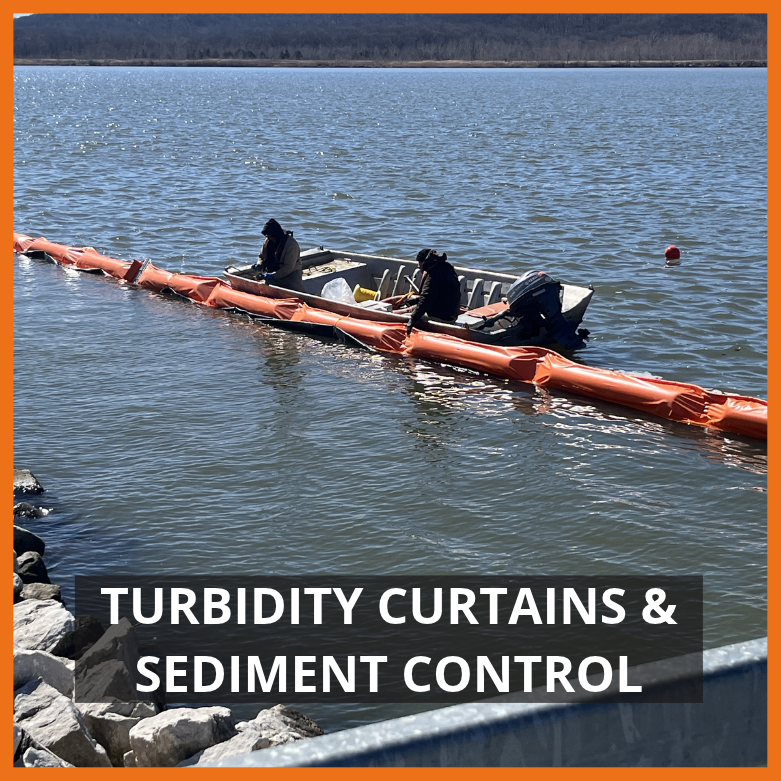
What Is the Importance of a Turbidity Curtain? When construction, dredging, shoreline development, pipeline installation, bridge work, or other industrial...
Read More
Posted on: September 11, 2026
What Are Vacuum Truck Services? Some people who need vacuum truck services may never have considered it or may not...
Read More
Posted on: September 1, 2026
Now What? When cleanup crews leave the site and the last bit of impacted soil is “removed”, it’s tempting to...
Read More
Posted on: August 3, 2026
The Cost of Waiting Too Long When an oil or chemical spill occurs, every minute counts. What may begin as...
Read More