


ACME’s Vacuum Truck Services
What Are Vacuum Truck Services? Some people who need vacuum truck services may never have considered it or may not...
Read MoreWhen construction, dredging, shoreline development, pipeline installation, bridge work, or other industrial activities occur near a river, lake, pond, harbor, or coastal area, effective sediment control is essential to protecting water quality. The Clean Water Act (CWA) and the National Pollutant Discharge Elimination System (NPDES) require federal and state agencies to enforce regulations designed to protect marine ecosystems. Compliance is not only a legal obligation, but also the responsible thing to do. Here at ACME Environmental, our turbidity curtain systems are manufactured to meet Department of Transportation (DOT) and Clean Water Act requirements for sediment control in aquatic environments. With these systems, we can adapt to changing water conditions, project requirements, and client needs at any time. All our turbidity curtains are fully customizable. Learn more about them at this link!
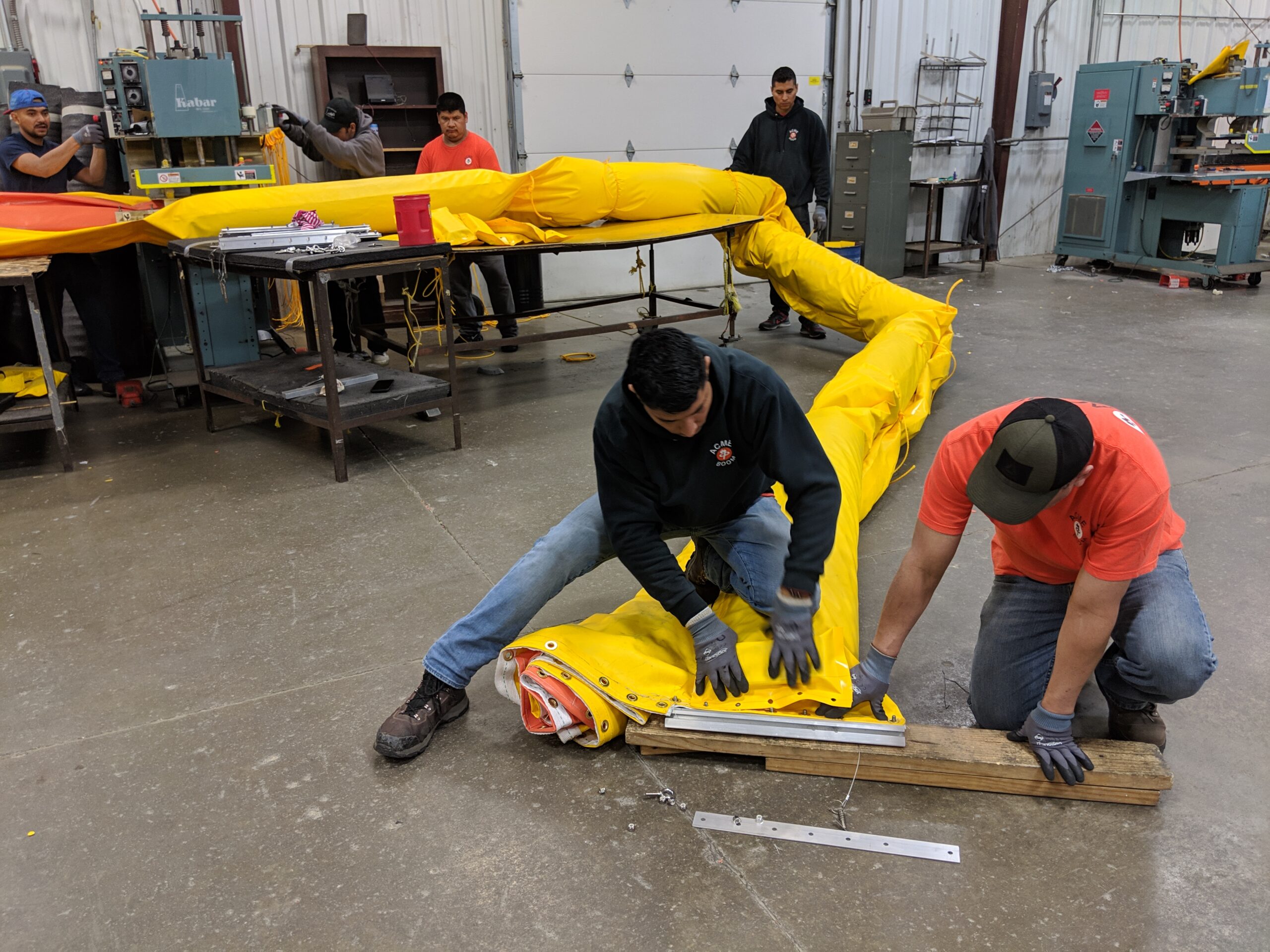
ACME employees manufacturing a turbidity curtain and putting on the end connectors
A turbidity curtain, also called a silt curtain, turbidity barrier, silt barrier, sediment barrier, or floating silt fence, can be an important component of a project’s erosion and sediment control plan. These floating barriers are designed to limit the movement of suspended sediment and silt within the water, helping keep disturbed material contained around an active work area. However, installing a turbidity curtain is not the end of the story. Effective sediment control and silt containment also require contractors to understand what is happening in the water before, during, and after construction activities begin. That means monitoring conditions, inspecting containment systems, documenting changes, and taking corrective action when conditions change. For many projects, the most effective approach is to view a turbidity curtain as part of a broader waterway protection and environmental monitoring strategy.
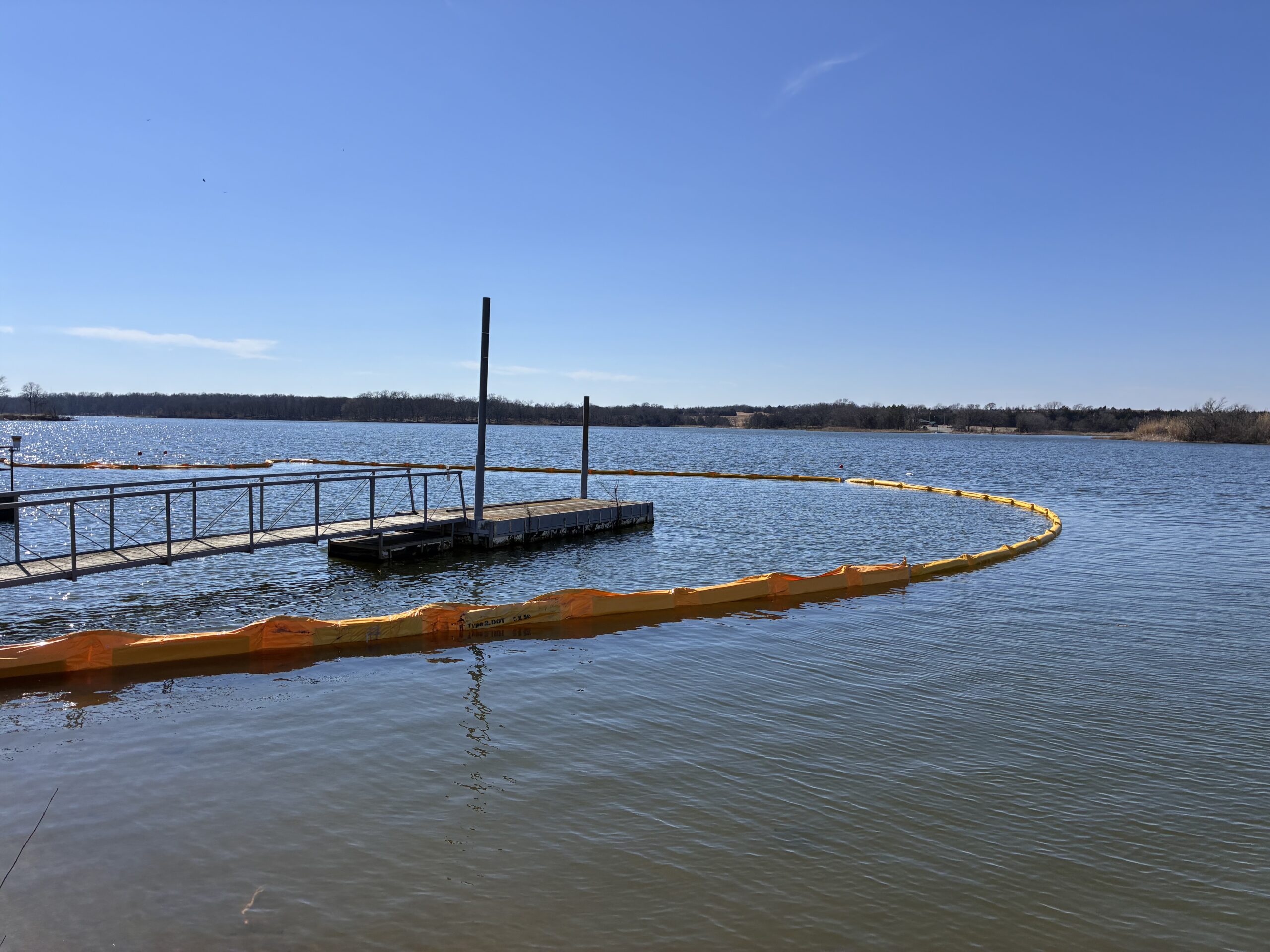
ACME Turbidity Curtain that had been deployed and anchored in a large lake in Oklahoma
Depending on the application, a sediment curtain can be engineered with either a solid, impermeable fabric skirt or a permeable filter-screen skirt. The appropriate configuration depends on factors such as water depth, current velocity, sediment characteristics, project duration, and the level of environmental protection required. At its core, a sediment curtain is designed to create a controlled barrier within the water. A float provides buoyancy at the surface while the skirt extends downward to contain sediment. Ballast chains help keep the skirt upright in a vertical position, while tension cables, anchor points, and end connectors provide stability and help maintain the curtain’s intended installation as water conditions change. When properly selected, installed, and maintained, these components work together to reduce the movement of disturbed sediment beyond the designated work area. Download our Turbidity Curtain Deployment Brochure to learn more.
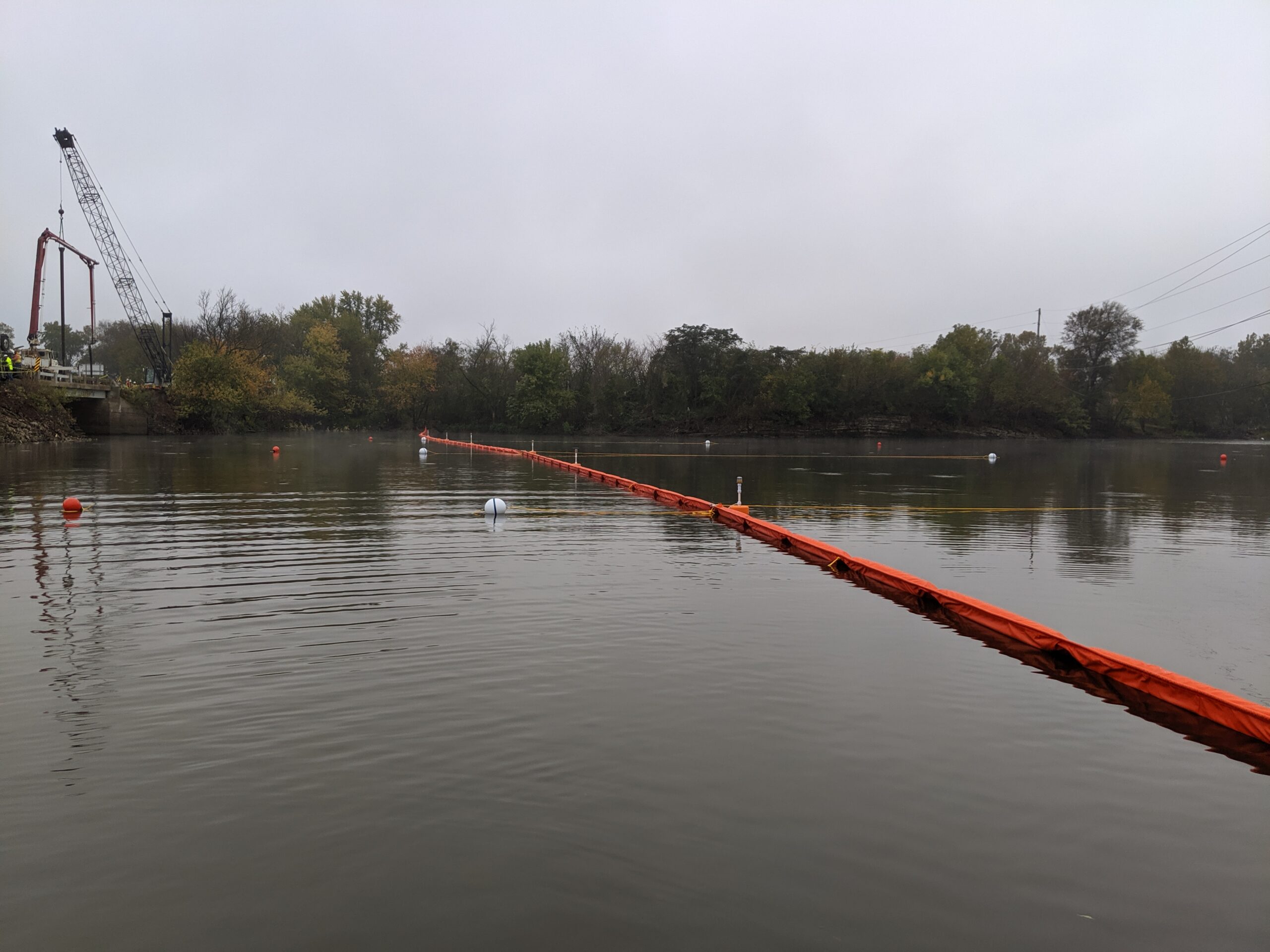
A turbidity curtain that ACME had installed near a bridge that was under construction
But containment alone does not tell you what is happening behind or around the curtain. A curtain is a control measure and cannot actively evaluate its own performance. For example, it cannot:
That is where monitoring becomes an important part of the overall sediment-control strategy. Regular visual inspections can identify movement, gaps, damage, or changing site conditions, while turbidity measurements and water sampling can provide additional insight into water quality and sediment movement. Consistent documentation creates a record of site conditions and system performance, helping project teams recognize potential issues early and make informed adjustments when conditions change.
Reach out to ACME Environmental with questions you may have about deployment, installation, water monitoring, or recommendations of any kind!
There is no single curtain configuration that is appropriate for every waterway construction project. As mentioned before, water depth, current velocity, wave action, wind, tides, project duration, sediment characteristics, and the type of construction activity can all affect the appropriate sediment containment approach. ACME Environmental manufactures custom DOT turbidity curtains in Type I, Type II, and Type III configurations for different site conditions. Type I systems are intended for calmer, protected waters, while Type II and Type III systems provide additional strength and stability for more demanding conditions.
DOT Type I turbidity curtains are generally suited for calmer, protected environments where wind, waves, and current are limited. The specific configuration should always be evaluated against the actual conditions at the project site.
Potential applications can include:
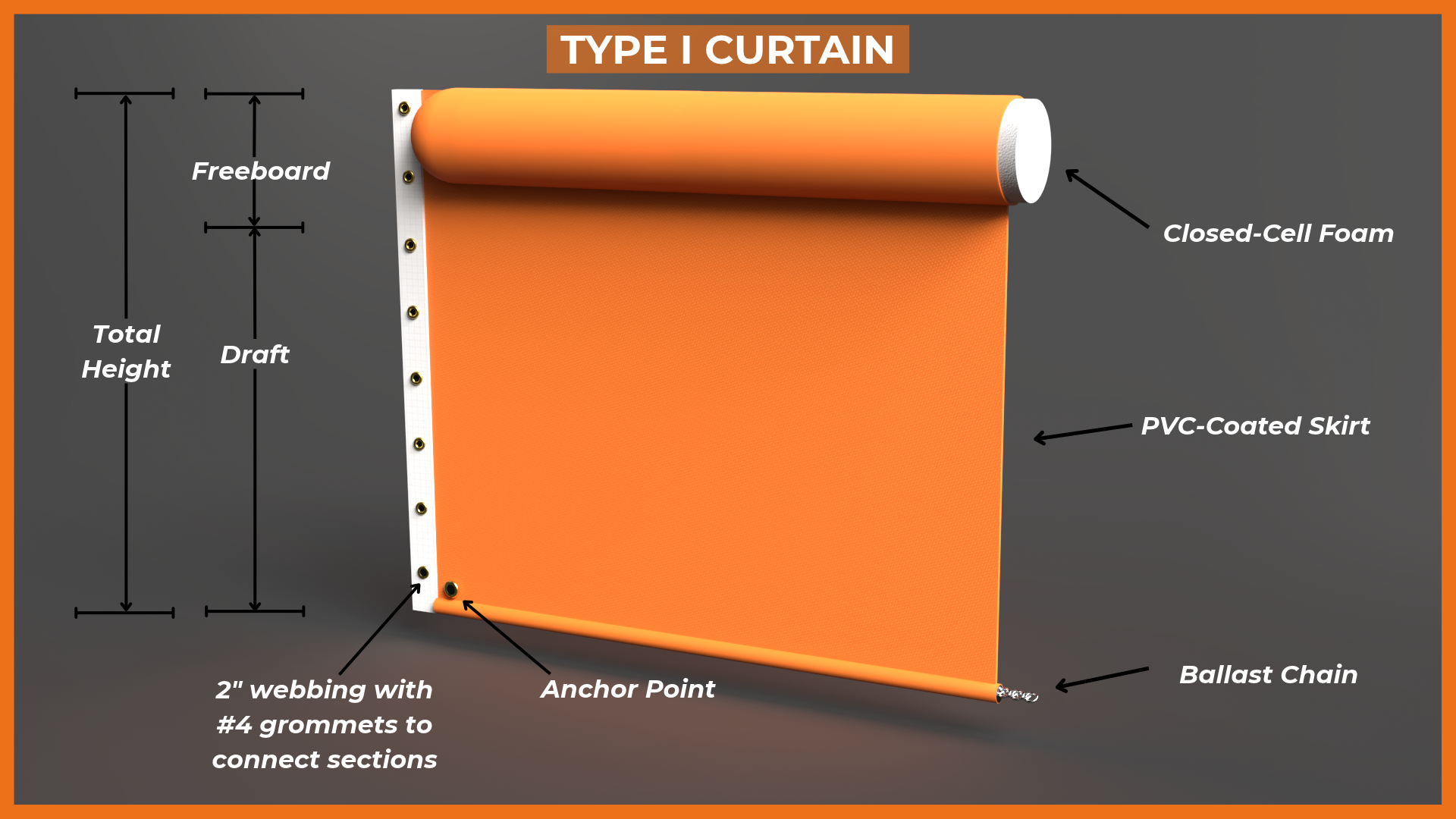
A 3D Model of ACME’s Type I Turbidity Curtain
DOT Type II turbidity curtains provide additional support for applications involving greater water depth and moderate water current. ACME’s Type II system incorporates a top tension cable and end connectors intended to provide increased stability compared with a basic Type I configuration.
They may be used for applications such as:
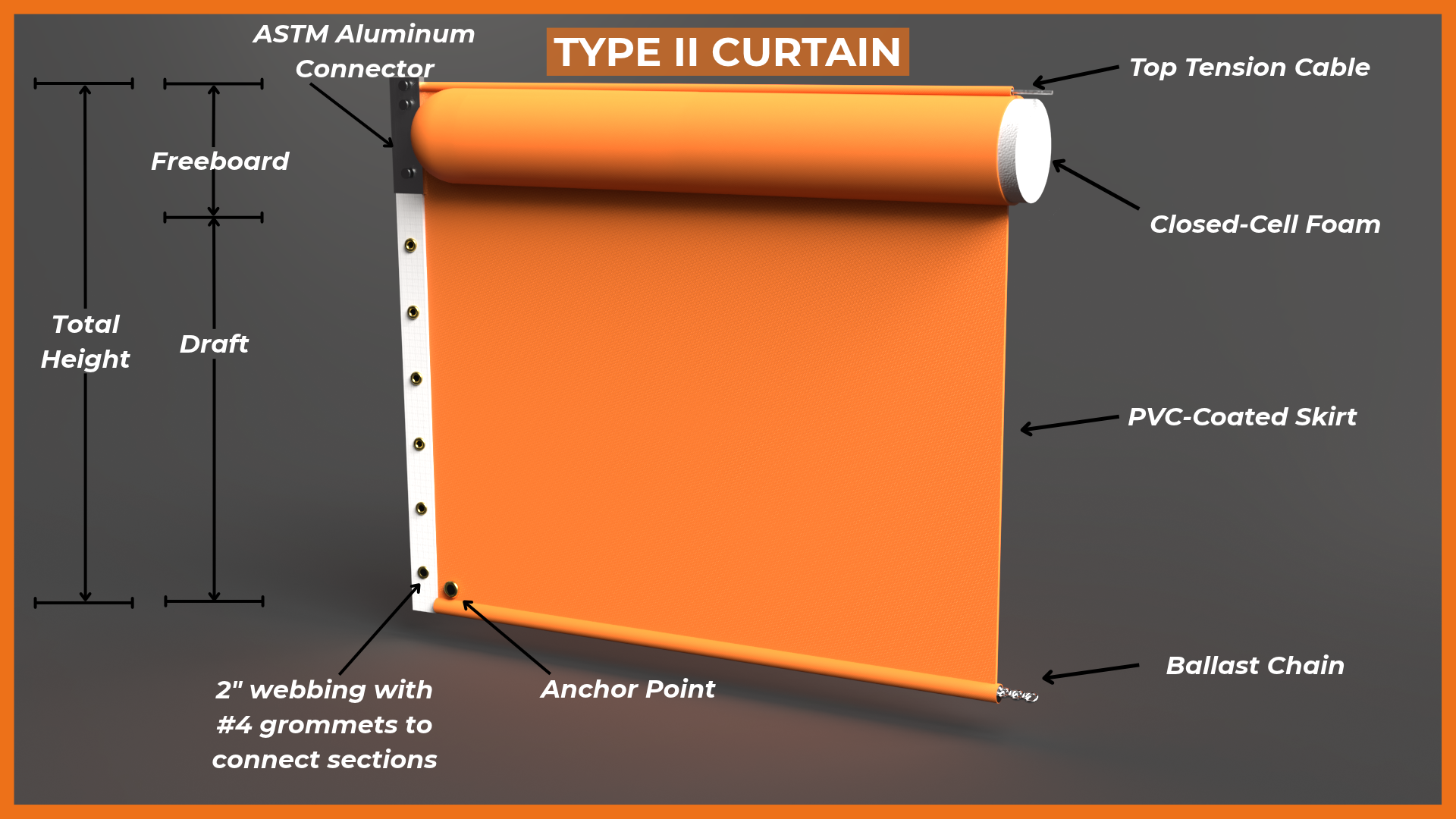
A 3D Model of ACME’s Type II Turbidity Curtain
For more demanding environments, DOT Type III turbidity curtains provide a heavier-duty configuration designed for stronger currents, wind, waves, and longer-term applications. Depending on project requirements, Type III systems incorporate additional tension cables and optional geotextile filter-screen material.
This can make them applicable to projects involving:
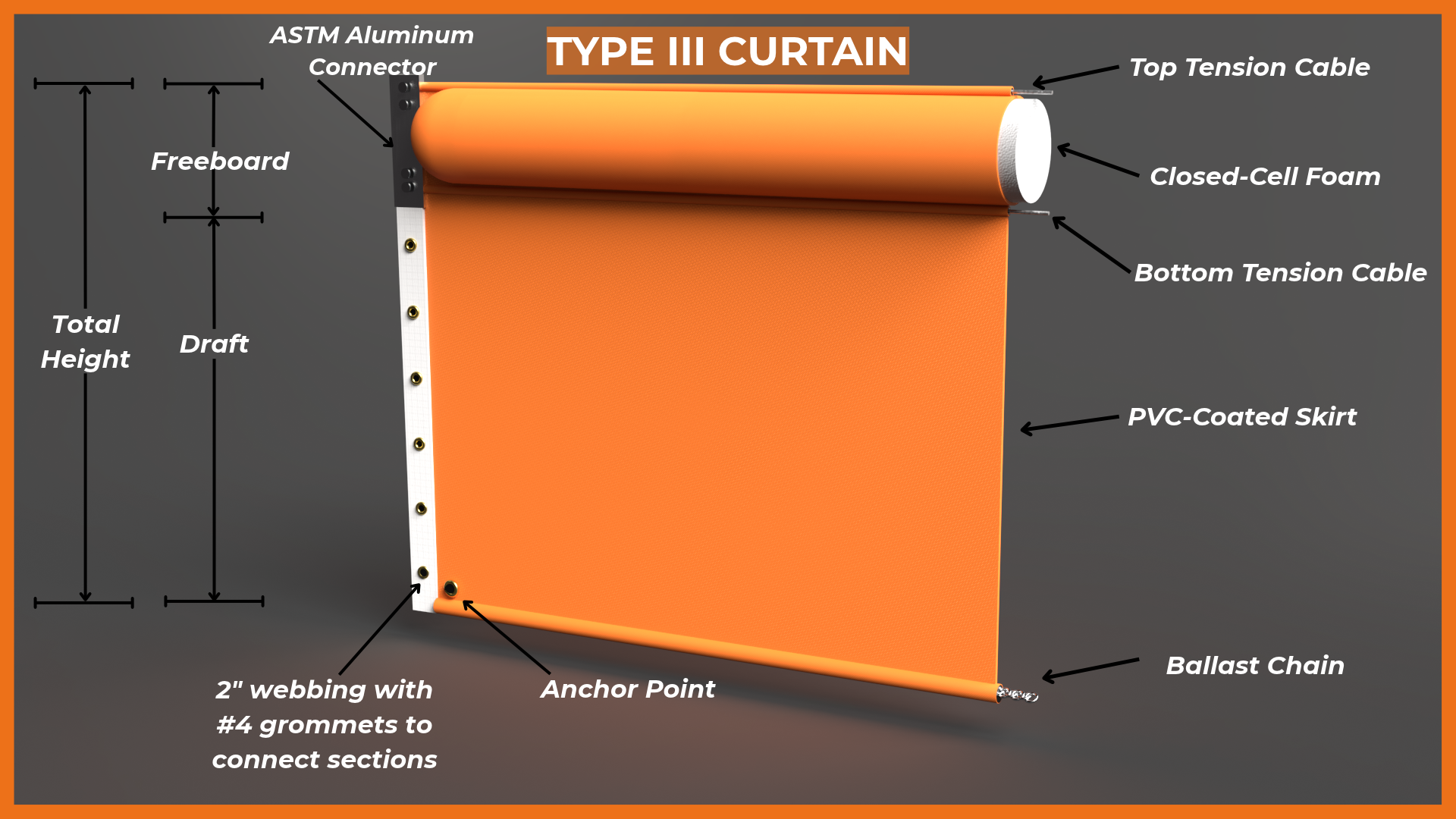
A 3D Model of ACME’s Type III Turbidity Curtain
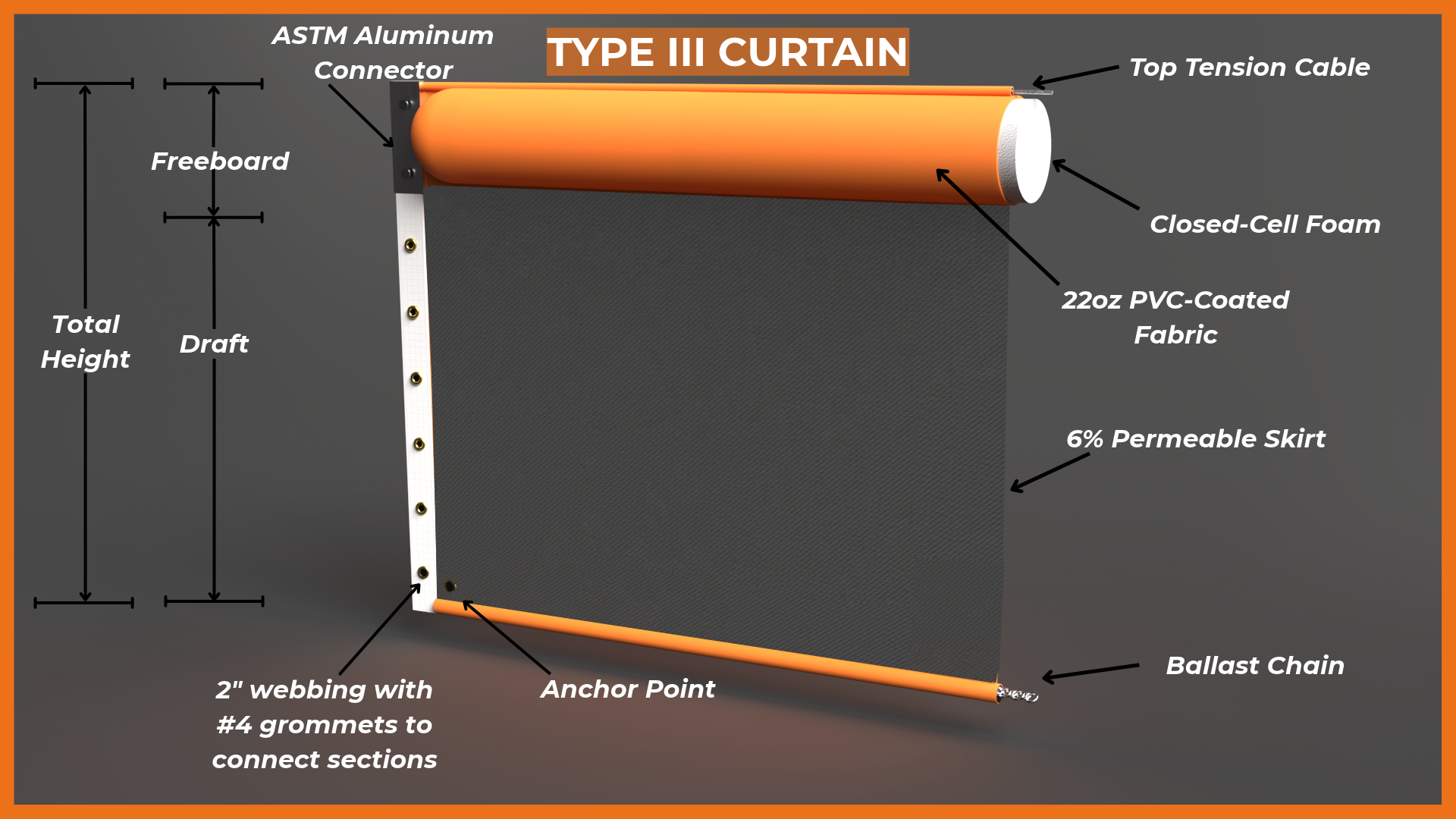
A 3D Model of ACME’s Type III Turbidity Curtain With a Permeable Skirt
Choosing a curtain that is properly suited to the site helps ensure the system can maintain its intended position, provide the necessary sediment containment, and withstand the conditions it will encounter throughout the project. An improperly selected curtain may experience excessive movement, inadequate containment, or unnecessary wear, making proper product selection an important part of an effective sediment-control plan. Understanding the differences between curtain types, skirt materials, flotation, and construction can help contractors make informed decisions before installation.
Download the ACME Turbidity Curtain Brochure and Specification Guide to explore available curtain types, compare specifications, and learn more about selecting the appropriate solution for your next project.
Effective sediment control starts with the right equipment, but it takes more than installation to ensure a project stays on track. A successful sediment-control plan requires proper curtain selection and deployment, routine inspections, water-quality monitoring, ongoing maintenance, and documentation to identify potential issues and respond to changing site conditions. When these practices work together, contractors are better equipped to manage suspended sediment, protect surrounding waterways, and maintain compliance with applicable environmental requirements throughout the project.
The question shouldn’t simply be, “Do we have a turbidity curtain?” It should be, “Do we have the right sediment-control system in place, and are we taking the necessary steps to ensure it performs as intended?” ACME Environmental offers a range of turbidity curtains designed to accommodate varying water depths, flow conditions, and project requirements. Whether your application calls for a solid, impermeable skirt or a permeable filter-screen design, our team can help determine the right configuration for your project. But our capabilities extend well beyond turbidity curtains. ACME provides a broad range of environmental products and services, including containment boom, spill response equipment, emergency oil spill response, vacuum services, and environmental remediation. From helping customers select the right equipment and prepare for upcoming projects to providing support during unexpected environmental challenges, ACME brings decades of industry experience and a comprehensive approach to environmental protection.
Whether you’re planning a waterway construction project, preparing for dredging operations, or developing a sediment-control plan, ACME Environmental is ready to help. Contact our team to discuss your project requirements and learn how our products, services, and response capabilities can support your next project.
Oil Spill Response: Land vs Water
ACME In Action: Northern Oklahoma Oil Spill
Services: Site Maintenance and Restoration

Posted on: September 11, 2026
What Are Vacuum Truck Services? Some people who need vacuum truck services may never have considered it or may not...
Read More
Posted on: September 1, 2026
Now What? When cleanup crews leave the site and the last bit of impacted soil is “removed”, it’s tempting to...
Read More
Posted on: August 3, 2026
The Cost of Waiting Too Long When an oil or chemical spill occurs, every minute counts. What may begin as...
Read More
Posted on: June 19, 2026
Why Preparation Matters When severe weather strikes, industrial facilities face risks that extend far beyond structural damage and operational downtime....
Read More