


ACME’s Vacuum Truck Services
What Are Vacuum Truck Services? Some people who need vacuum truck services may never have considered it or may not...
Read MoreA containment boom is one of the first and most used tools in an oil or chemical spill response. Whether deployed across rivers, near shorelines, in the ocean, in harbors, or in water treatment plants, they act as floating barriers that contain contaminants for recovery. According to the U.S. Environmental Protection Agency, containment booms are commonly used to prevent spilled oil from spreading and to guide contaminants toward collection points where equipment such as oil skimmers and vacuum trucks is staged.
However, not all containment booms are designed for the same environment. The material composition and construction of the boom play a major role in determining whether it will perform effectively in oil spills, chemical releases, or debris-ridden waterways. Understanding these differences helps operators choose the right equipment before an emergency occurs.
Although materials and design vary, most containment booms share five components:
These elements work together to contain floating contaminants while maintaining structural integrity in waves, currents, and wind.
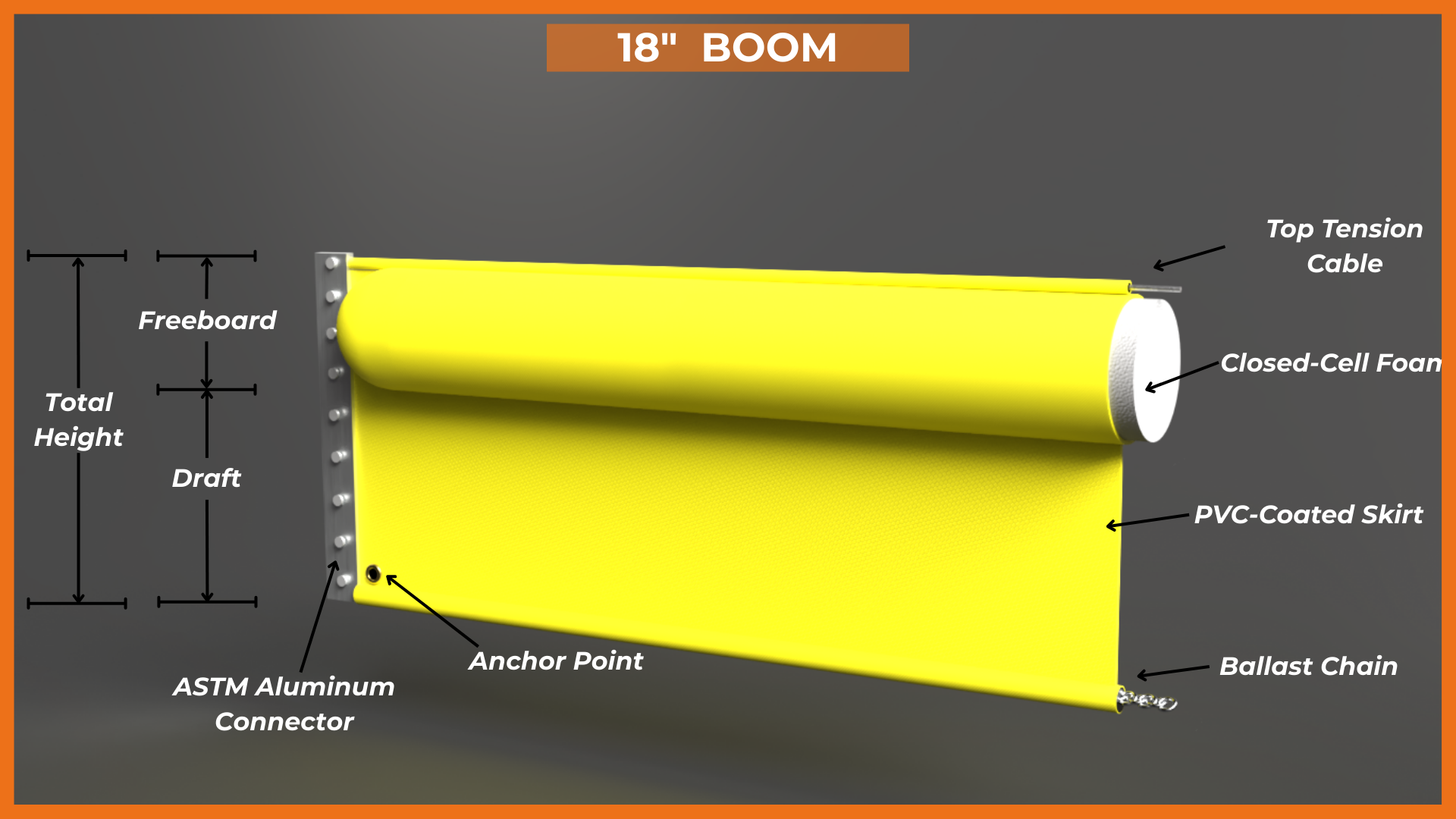
3D model for ACME’s yellow 18″ Containment Boom with top cable (Contractor Boom)
For most oil spill response operations, regular PVC-coated containment booms are considered the industry standard due to their durability, flexibility, and resistance to hydrocarbons. These booms are constructed from PVC-coated fabrics and reinforced with flotation, tension cables, and ballast chains to create a stable floating barrier capable of containing and directing oil toward recovery points.
A common configuration used in inland spill response is the 18” Contractor Boom, which typically features 22-ounce PVC-coated fabric, 6” float, 12” skirt, 5/16” tension cable above the float, and a 1/4″ ballast chain at the bottom of the skirt. The flotation keeps the boom upright while the skirt prevents oil from escaping underneath, and the cable and chain provide structural stability in moving water. This design creates a containment system that is both strong and flexible, making it effective in rivers, lakes, and other inland waterways.
Because of its balance of performance and maneuverability, the contractor boom is widely used in rapid response operations. Its lightweight design allows for quick deployment and sufficient containment for most inland spill scenarios. To maintain readiness, ACME Environmental aims to keep approximately 10,000 feet of contractor boom in stock at all times, ensuring rapid deployment when spills occur.
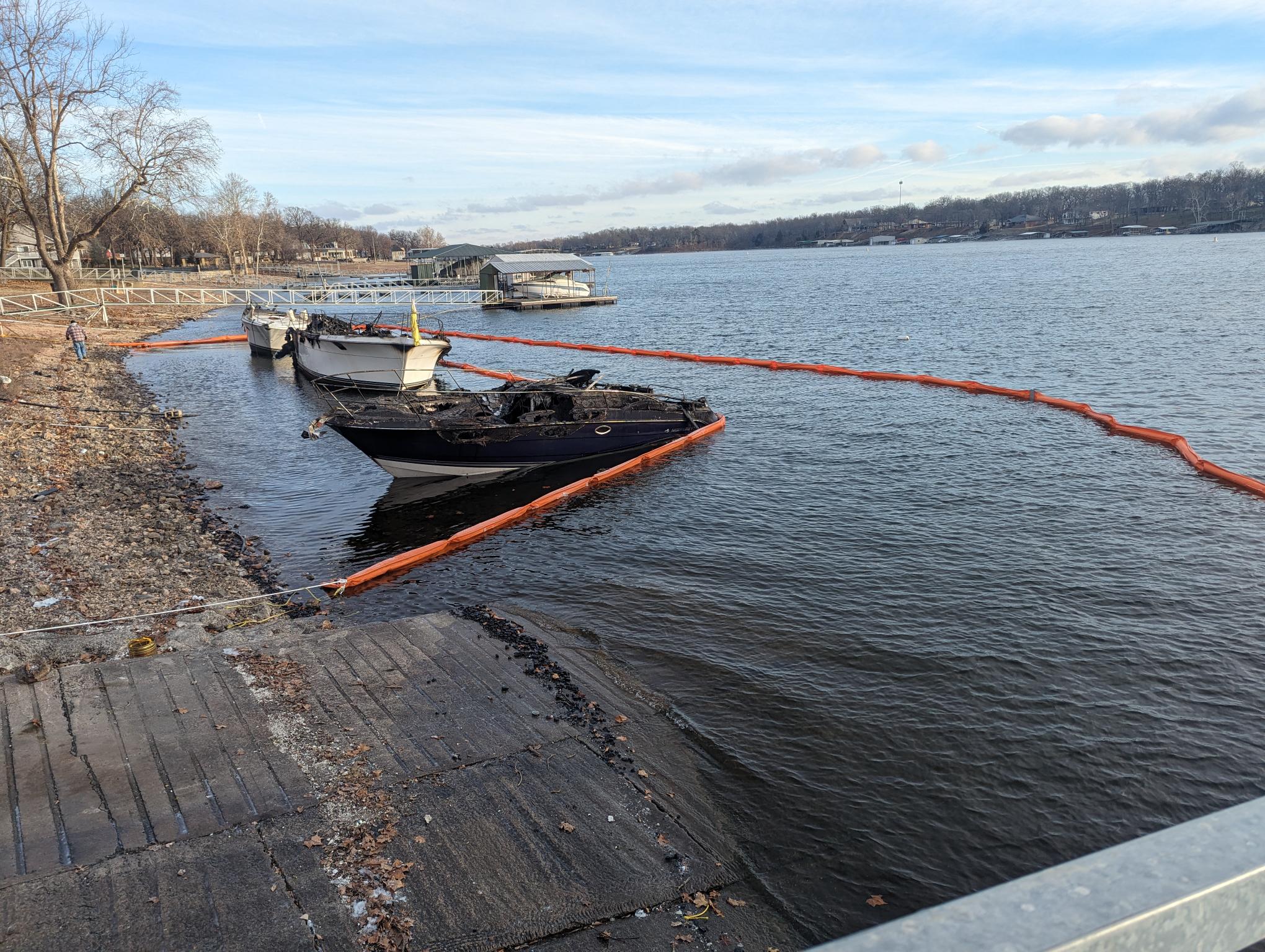
ACME’s 18″ Contractor Containment Boom deployed around a boat that had caught on fire to contain fuel, oil, and debris
When addressing spills involving hazardous chemicals, strong solvents, or aggressive industrial liquids, it’s essential to understand that a standard oil boom might not be effective. Many common boom materials can deteriorate or lose their structural integrity when they are exposed to these substances. In such cases, it’s vital to utilize materials that offer superior chemical resistance, such as polyurethane or other specially engineered chemical-resistant fabrics designed to withstand harsh chemicals over extended periods. A great example is 8130 30-ounce fabric, known for its durability and ability to endure demanding conditions. This heavier material provides enhanced strength, chemical resistance, and long-lasting performance, making it ideal for tough industrial spill response scenarios.
At ACME Environmental, 8130 fabric is not only used for floating barriers in spill response, but is also utilized in water treatment plant solutions, where durability and resistance to constant water flow and operational stress are critical. Its proven reliability in both spill response and installation in water treatment plants highlights the importance of selecting the right materials for environments where performance and longevity are essential. Learn more about ACME’s water treatment plant solutions in this article.
From industrial spill response to permanent infrastructure like water treatment plant baffles, choosing high-quality materials ensures that these floating barriers perform as intended, protecting both the environment and critical operations. By understanding the unique requirements of each scenario, organizations can deploy the most effective solutions and reduce the risk of equipment failure during response efforts.
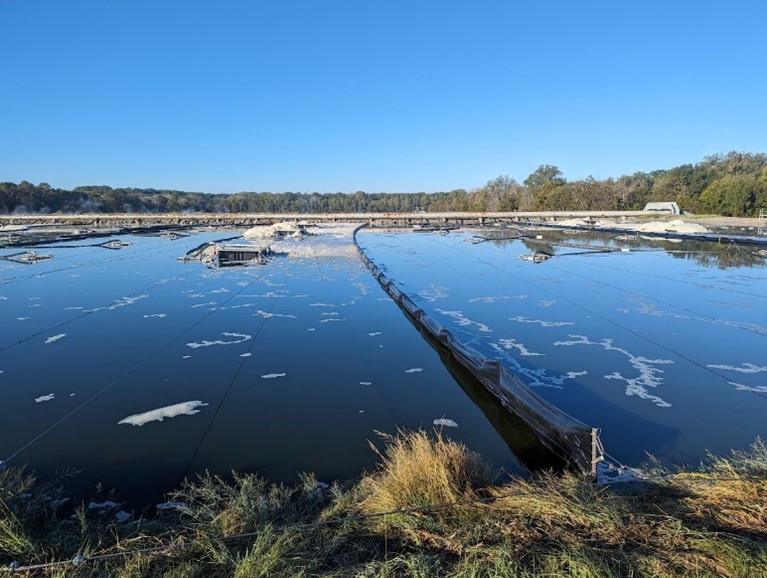
A picture of a baffle that had been deployed and installed in a water treatment plant by ACME
In waterways with strong currents and consistently high water flow, traditional impermeable floating barriers can experience significant stress from moving water. As currents push against the impermeable skirt, the force can place strain on anchor systems, tension cables, and flotation components. Over time, this stress can reduce the boom’s stability, make it more difficult to maintain proper positioning, limit its effectiveness in containing contaminants on the water’s surface, and even cause the fabric to tear.
In environments with strong currents or continuous water flow, floating barriers with permeable skirts provide a more reliable containment solution. Unlike solid barriers, permeable skirts allow water to pass through the system while still controlling surface contaminants. This reduces resistance against the boom, minimizing stress on the structure and anchoring systems, and allowing the barrier to remain stable in faster-moving waterways. Products such as the Seaweed Stopper Containment Boom and the DOT Type III Turbidity Curtain commonly use permeable skirt designs to maintain effective containment while allowing natural water movement due to their unique applications. ACME can also custom-fit any floating barrier with a permeable skirt; there are few limitations when it comes to customization. Contact ACME today if you need to configure a customized solution tailored to your needs.
An alternative solution designed specifically for these conditions is ACME’s 12” Fastwater Containment Boom. This boom is engineered to perform well in high-flow environments and features a 6” float and 6” skirt, providing a balanced profile that maintains effective surface containment while minimizing resistance to moving water. The design also incorporates a 5/16” top tension cable positioned above the float for added structural strength, and a 3/8″ chain ballast along the bottom of the skirt to help maintain proper vertical positioning in moving water. These components work together to create a containment system that remains durable, stable, and effective in challenging water conditions.
Selecting the right containment system for high-flow environments is critical to maintaining effective spill control. In waterways where strong currents are constant, equipment must be designed to work with the movement of water rather than against it. Solutions such as permeable skirt systems and ACME’s Fastwater Containment Boom provide a practical approach by reducing water stress while maintaining reliable surface containment. By using designs specifically engineered for these conditions, response teams can maintain stability, improve operational effectiveness, and ensure that containment strategies remain dependable even in the most challenging environments.
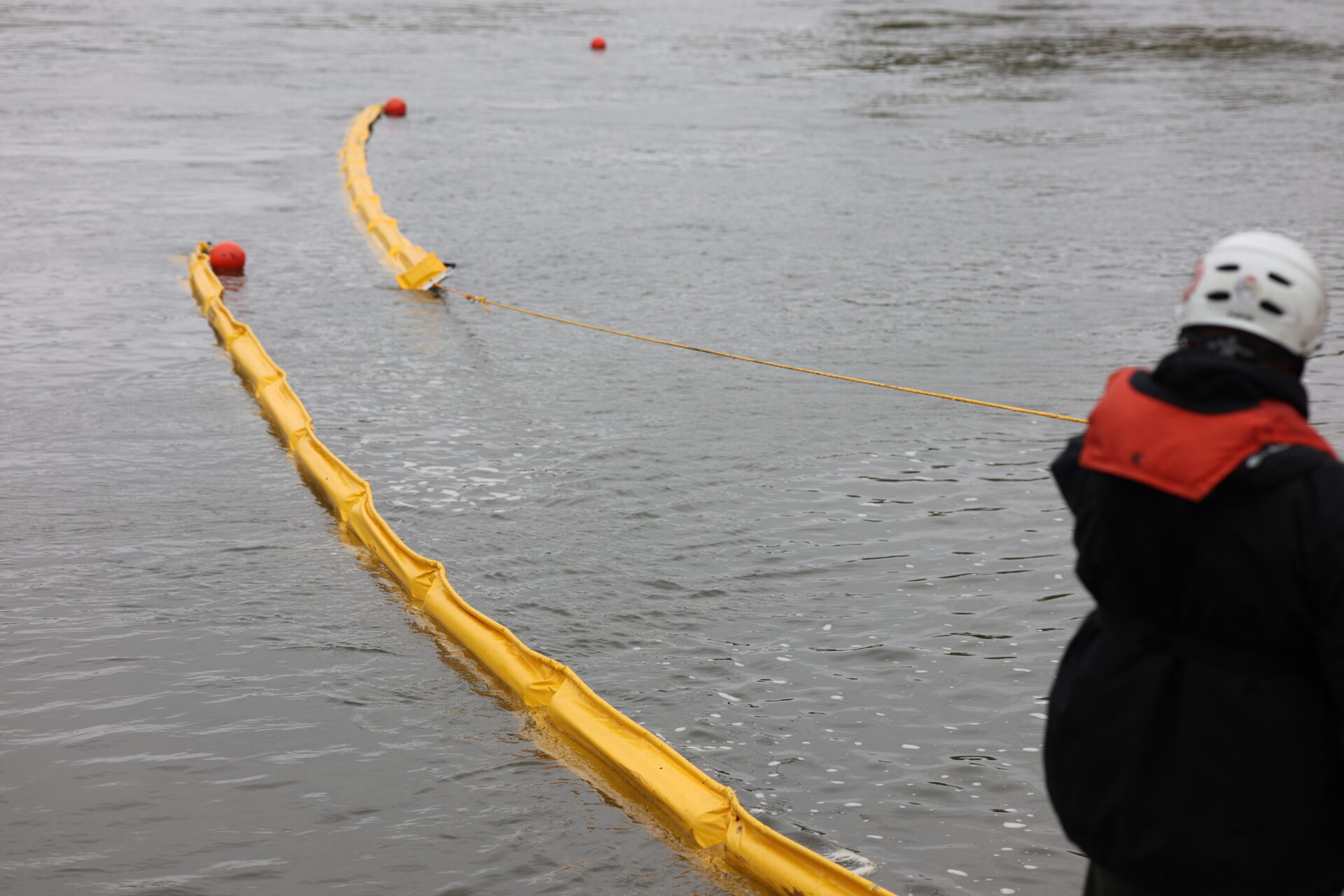
ACME’s 12″ Containment Boom deployed in a cascading pattern to simulate the recovery of oil in a river
In many industrial waterways, stormwater channels, facility outfalls, and storage warehouses near waterways, the need for containment often goes beyond temporary solutions. Locations that face ongoing operational risks or require continuous environmental protection typically depend on permanent floating barriers, which can remain in place for extended periods. In such conditions, traditional temporary booms may lack the long-term durability and stability necessary to endure constant exposure to water movement, debris, weather variations, and operational demands.
A permanent containment boom is specifically designed for long-term use, remaining installed in the water for months or even years while consistently providing reliable containment. One notable example of this type of system is ACME’s Perma Boom. For permanent installations that demand long-term containment, this boom should be your go-to.
Permanent containment booms like the ACME Perma Boom are often deployed near industrial facilities, fueling docks, terminals, and water treatment plants, where ongoing containment or exclusion zones are essential. These systems enable operators to proactively manage environmental risks while delivering continuous protection for sensitive waterways.
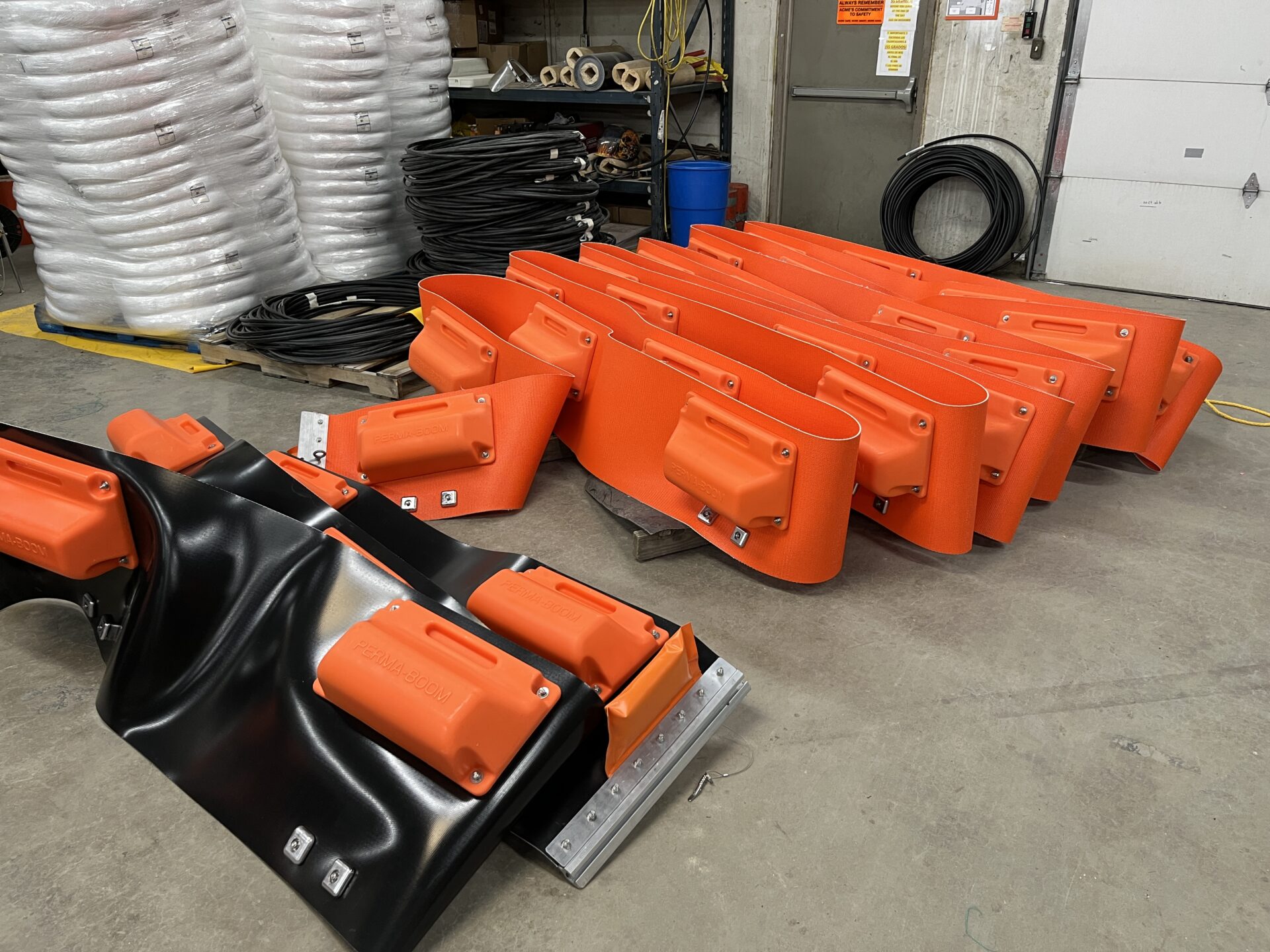
Black is PVC belting, and orange is urethane belting
Selecting the right containment solution is especially important when long-term protection is required. Permanent systems such as ACME’s Perma Boom provide a dependable solution for facilities that need continuous containment and environmental protection. By installing durable containment systems designed for extended deployments, organizations can reduce operational risk and maintain reliable control of potential contaminants and debris in waterways.
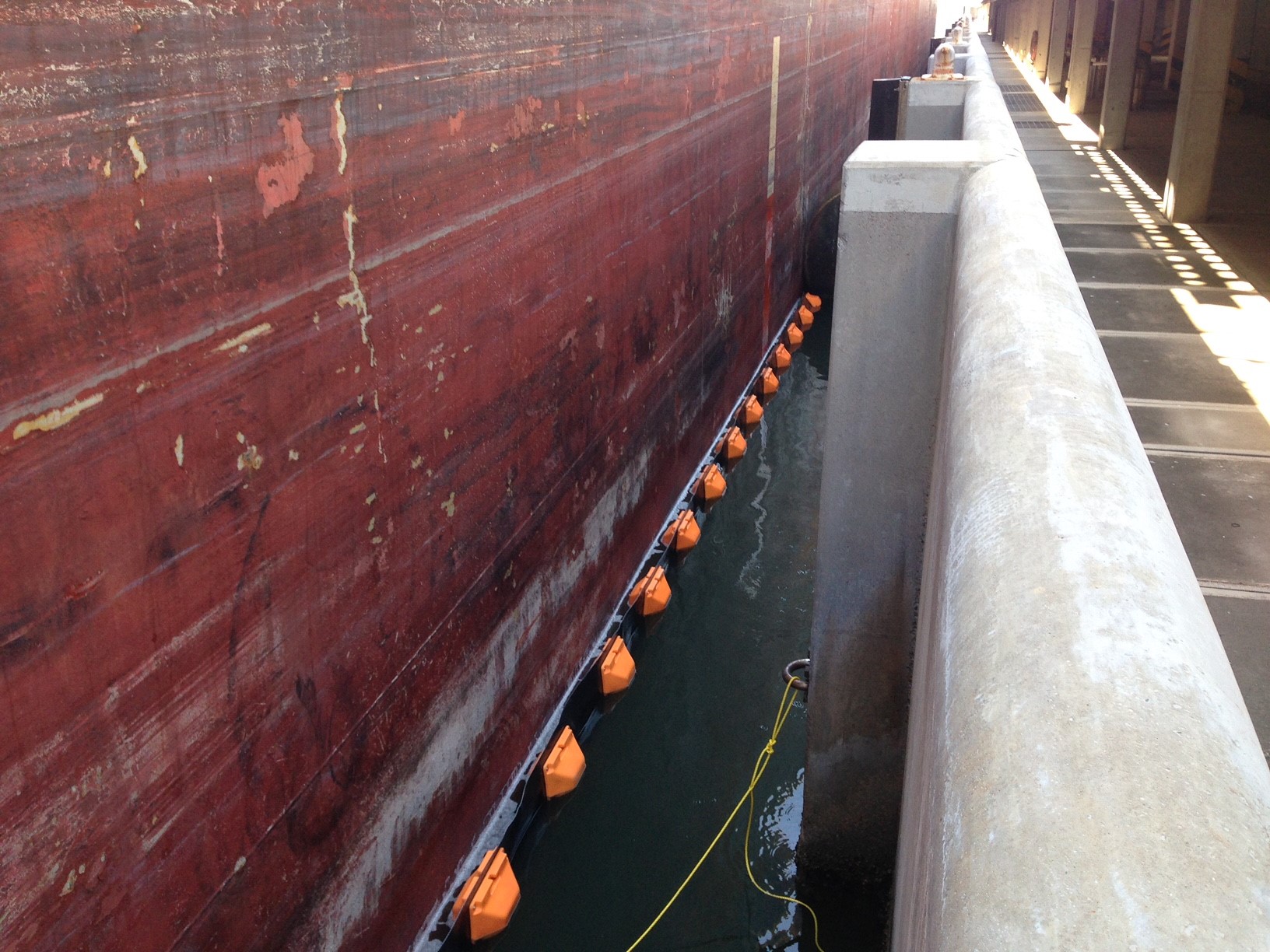
Perma Boom deployed between a ship and a docking station
|
Boom Type |
Example System |
Key Advantage |
Application |
|
PVC-Coated Fabric Boom |
18″ Contractor Boom |
Lightweight, hydrocarbon-resistant, and easy to deploy quickly |
Inland oil and fuel spill response in rivers, lakes, and other inland waterways |
|
Chemical-Resistant Boom Materials |
8130 30-ounce Fabric Systems |
High resistance to chemical degradation and harsh industrial liquids |
Chemical spills, refineries, petrochemical facilities, and long-term installations in water treatment plants |
|
Permeable Skirt/Fastwater Boom |
12″ Fastwater Containment Boom |
|
Rivers with strong flow, industrial outfalls, and fast-moving waterways |
|
Permanent Containment Boom |
ACME Perma Boom |
Designed for long-term installations |
Permanent containment around terminals, fueling docks, and industrial facilities. Great for debris containment |
A containment boom serves as a critical first line of defense in spill response, creating a physical barrier that prevents oil, chemicals, other hazardous materials, and debris from spreading into sensitive ecosystems, shorelines, or critical infrastructure. Choosing the right boom material and design is essential because each type of spill and waterway presents unique challenges where one size DOES NOT fit all.
Using an improperly matched boom can lead to significant operational and environmental consequences, such as the 5 failure points of a containment boom:
For facility managers, emergency responders, and environmental teams, having the correct containment equipment staged and ready is just as critical as having a comprehensive spill response plan. Proper boom selection ensures that response operations are effective, efficient, and capable of protecting both people and the environment under a variety of challenging conditions.
At ACME Environmental, our team provides a full range of containment boom solutions designed for just about any scenario. From rapid-deployment containment boom to heavy-duty permanent barriers, we help organizations choose the right materials for their unique operating conditions.
Contact ACME Environmental today to learn how the right containment system can strengthen your spill response strategy and protect critical waterways before an incident occurs.

Posted on: September 11, 2026
What Are Vacuum Truck Services? Some people who need vacuum truck services may never have considered it or may not...
Read More
Posted on: September 1, 2026
Now What? When cleanup crews leave the site and the last bit of impacted soil is “removed”, it’s tempting to...
Read More
Posted on: August 3, 2026
The Cost of Waiting Too Long When an oil or chemical spill occurs, every minute counts. What may begin as...
Read More
Posted on: June 19, 2026
Why Preparation Matters When severe weather strikes, industrial facilities face risks that extend far beyond structural damage and operational downtime....
Read More