


ACME’s Vacuum Truck Services
What Are Vacuum Truck Services? Some people who need vacuum truck services may never have considered it or may not...
Read MoreProtecting waterways during construction, dredging, remediation, and spill-response operations requires more than simply reacting to contamination after it occurs. In rivers, lakes, ponds, marshes, harbors, and coastal environments, even a small amount of uncontrolled sediment, oil, or fuel can spread rapidly, impacting aquatic habitats, water quality, and infrastructure.
Waterway protection depends on the strategic deployment of floating barrier systems such as turbidity curtains and oil containment boom, along with digital technologies to assist in pre-planning and emergency response plans. When paired with proper planning, professional deployment, and digital technologies, these systems dramatically reduce environmental risk and improve operational efficiency across the board
At ACME Environmental, waterway protection systems are engineered specifically for demanding environmental conditions, from calm inland ponds to tidal coastal waterways, and industrial construction zones to active spill response; ACME Environmental covers it all. With decades of experience in environmental containment and spill response, ACME understands that no two waterways behave the same, and successful containment depends on selecting the right equipment for each specific environment and knowing what to do before something happens.
Waterways are highly dynamic environments. Wind, current, wave action, boat traffic, and changing water levels can all affect the movement of contaminants and suspended sediment. Once pollutants enter a body of water, they rarely remain isolated. Instead, they migrate across the surface or throughout the water, creating challenges that become more difficult and expensive to manage the longer they remain uncontrolled.
Oil and fuel spills are especially dangerous because of how rapidly they spread across the surface of water. Even relatively small releases can expand into large slicks within minutes. Without immediate containment, contaminants may travel toward shorelines, wetlands, marinas, stormwater outfalls, and other sensitive habitats. According to the National Oceanic and Atmospheric Administration (NOAA), a variety of spill tools and techniques are necessary to reduce the impact of spills and quickly clean them up.
Not all environmental threats remain visible on the surface. Construction activities such as dredging, bridge work, shoreline stabilization, marine demolition, and pipeline crossings can disturb large quantities of bottom sediment. Once disturbed, fine sediment particles become suspended in the water, increasing turbidity and reducing water clarity. In many industrial or historically active waterways, these sediments may already contain petroleum hydrocarbons, heavy metals, or other contaminants. If not properly controlled, these materials can migrate downstream and impact fish habitat, aquatic vegetation, wetlands, and municipal water systems. This combination of floating contamination and suspended sediment creates a complex environmental challenge that requires specialized containment systems designed specifically for aquatic environments and effective pre-plans and response plans.
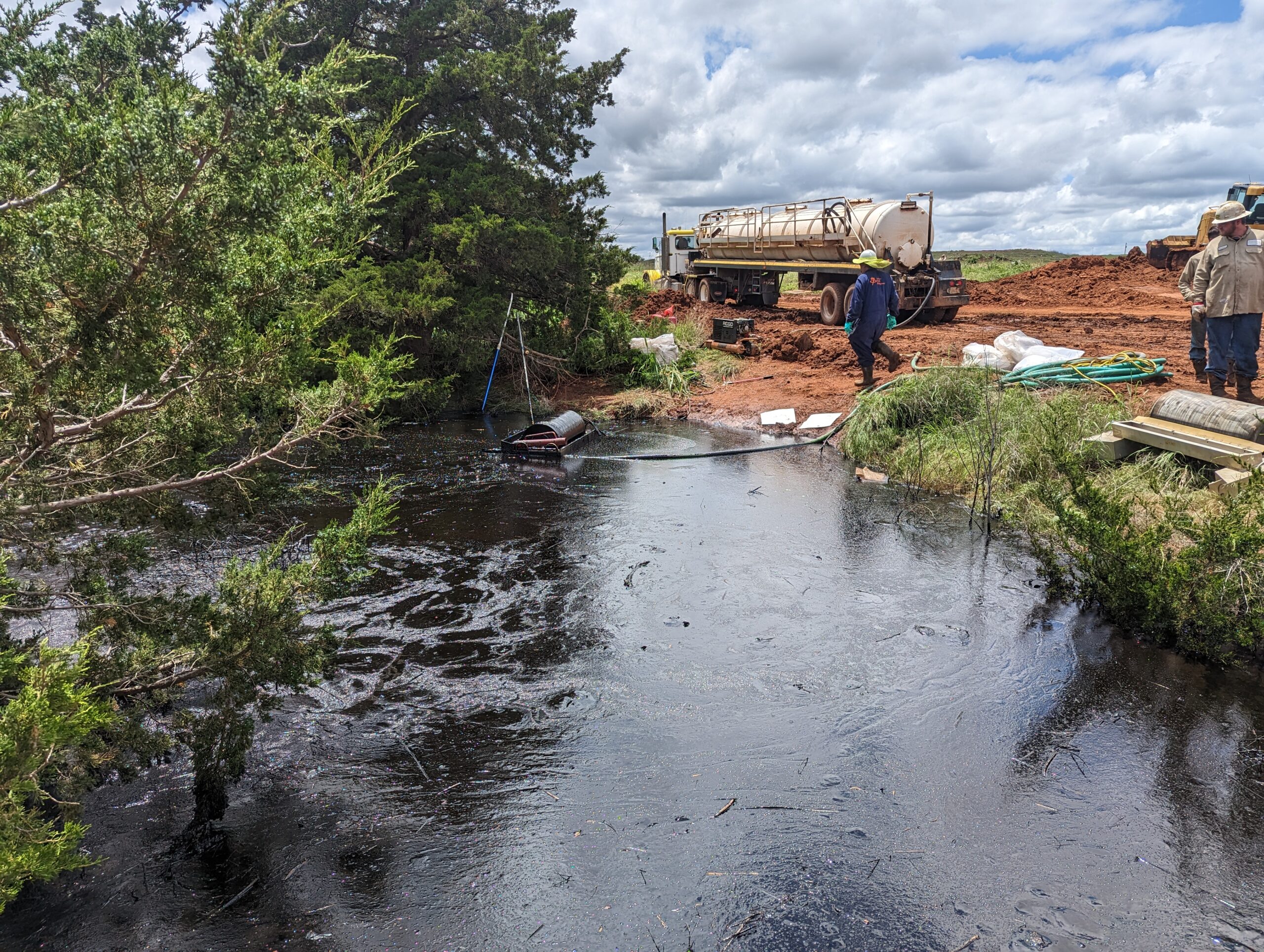
ACME utilizing oil skimmers, vacuum trucks, rakes, and pumps to clean thick oily sludge out of a pond
Containment Boom are one of the most recognizable and effective tools used in environmental spill response. Designed as floating barriers, booms are deployed on the water surface to contain, divert, or exclude floating contaminants such as oil, fuel, and debris. Their primary purpose is to stop pollutants from spreading into larger areas where recovery becomes more difficult, and remediation efforts become significantly larger. A typical containment boom consists of a flotation chamber above the waterline, a submerged skirt below the surface, a ballast chain for stability and anchoring, and a top tension cable that helps maintain structural integrity. These components work together to create a floating barrier capable of containing surface contaminants while remaining stable in currents and wave action.
At ACME Environmental, containment boom systems are engineered for a wide range of environmental conditions, from calm inland waterways to demanding offshore environments. ACME boom systems are manufactured using durable marine-grade PVC-coated fabrics that provide excellent resistance to UV exposure, abrasion, and harsh weather conditions. Depending on the application, systems can be configured with varying flotation sizes, skirt depths, ballast options, and connection systems for rapid deployment.
One of the clearest demonstrations of ACME’s containment boom in action came when nearly 2,000 gallons of diesel spilled into a marina on a large lake, posing an immediate threat to the thousands of residents and wildlife species that depend on its waters. ACME responded by deploying approximately 800 feet of 18″ Contractor Containment Boom across the mouth of the marina, creating a floating barrier to stop the fuel from spreading into the open lake. With that line of defense in place, ACME then surrounded the affected shorelines and boat slips with sorbent boom and additional containment boom, fully encapsulating the spill zone and setting the stage for cleanup. Once the containment systems were secured, sorbent materials were deployed throughout the area to absorb and remove the captured fuel. The result: a marina restored to its natural state, clean, healthy, and once again safe for the people and wildlife who call it home.
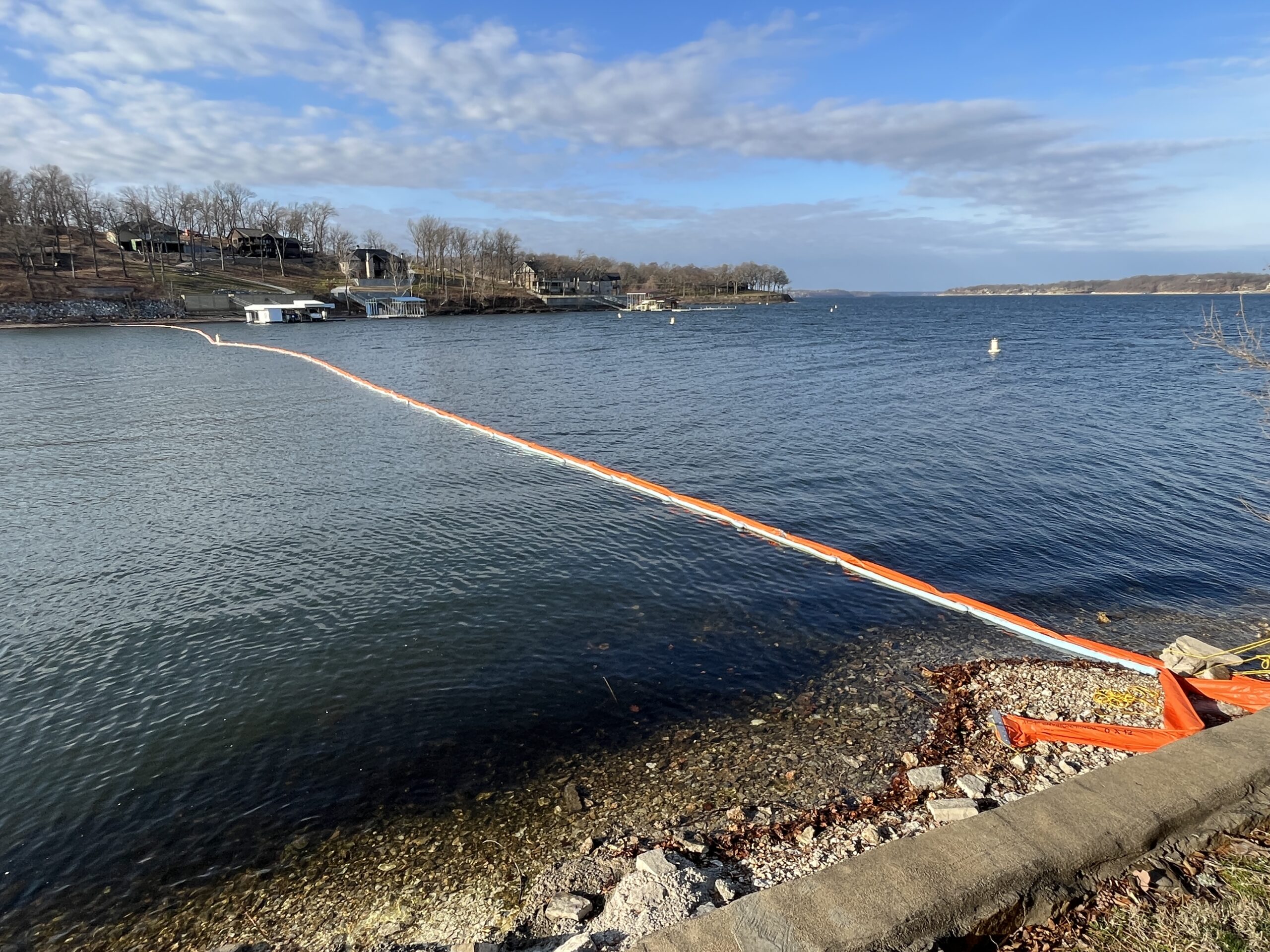
ACME 18″ Contractor Containment Boom deployed to prevent spread of diesel fuel
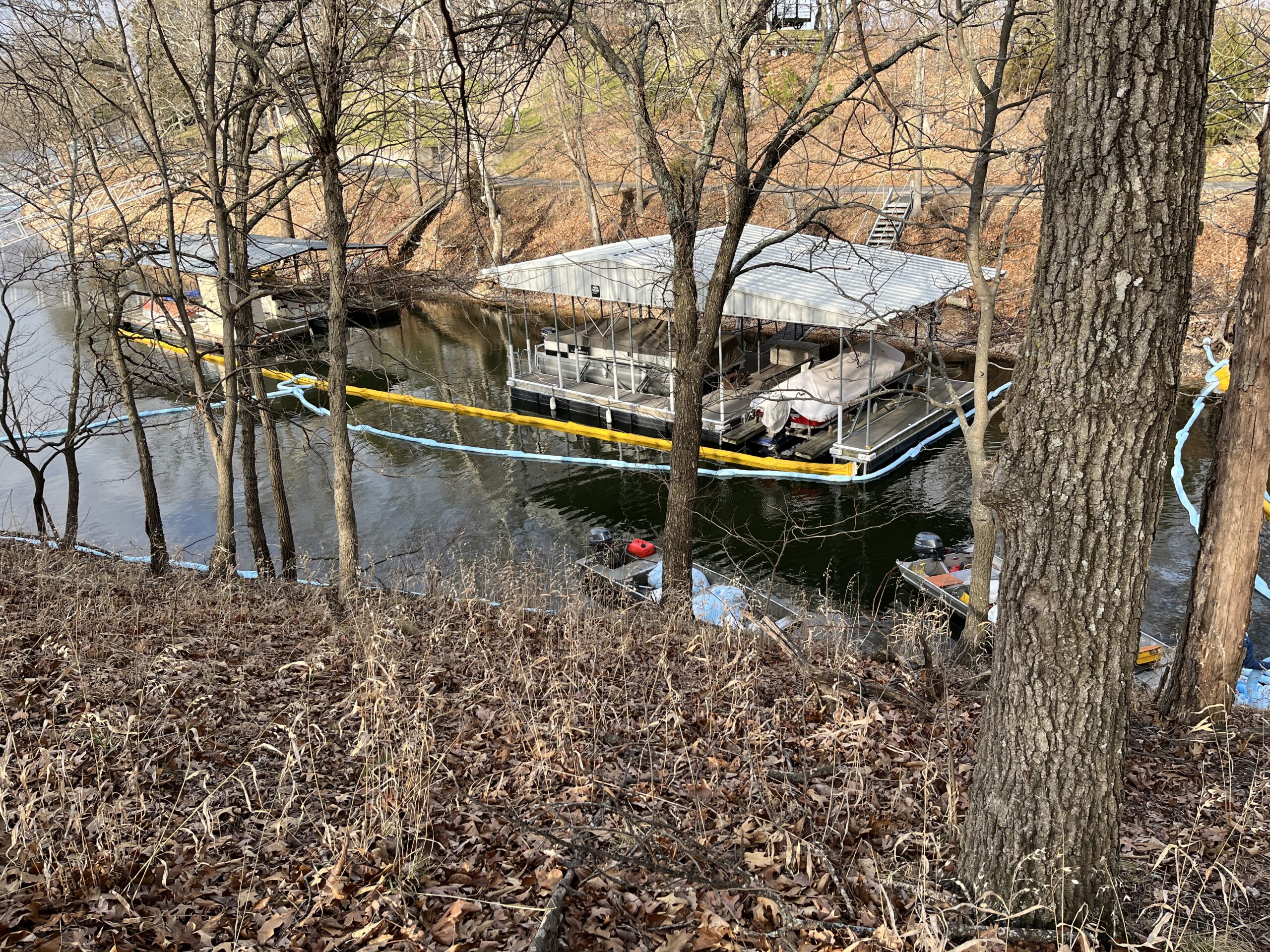
ACME 18″ Contractor Containment Boom and Sorbent Boom deployed around boat slips to prevent spread of diesel fuel
While containment booms are designed to control floating contaminants, turbidity curtains serve a very different but equally important purpose. Turbidity curtains are specifically engineered to control suspended sediment beneath the water’s surface during construction, dredging, remediation, and shoreline projects. These floating barriers function by slowing the movement of water around an active work zone, allowing suspended sediment particles to settle naturally before they can migrate downstream. Although they appear similar to oil containment boom systems, turbidity curtains extend much deeper into the water and are designed specifically for sediment control rather than surface containment. Proper sediment management is essential because excessive turbidity can negatively impact aquatic ecosystems by reducing sunlight penetration, disrupting fish spawning grounds, and transporting contaminants into previously unaffected areas. In many projects, controlling sediment migration is not only environmentally responsible but also required by federal, state, and local regulatory agencies.
ACME Environmental turbidity curtain systems are manufactured to meet Department of Transportation and Clean Water Act requirements for sediment control in aquatic environments. These systems are available in multiple configurations to accommodate varying water conditions and project demands. For example, ACME’s DOT Type III Turbidity Curtain is the most capable option for long-term projects in challenging environments with extreme water depths, strong currents, and tidal fluctuations. Its standout feature is a dual-cable tension system, with one cable above and one below the float pocket, ensuring the curtain remains strong, despite tidal and wind forces. A large closed-cell foam float maintains the surface freeboard, while a heavy-duty chain ballast stabilizes the curtain vertically and serves as an anchor point. For high-flow areas, a permeable skirt is available, allowing water flow through the skirt while capturing suspended sediments. Once installed, the Type III curtain allows sediment to settle within the work zone, reducing turbidity in surrounding waters. This protects aquatic habitats, maintains water clarity, and ensures compliance with the Clean Water Act and National Pollutant Discharge Elimination System (NPDES) requirements, making it essential for effective sediment management in aquatic environments.
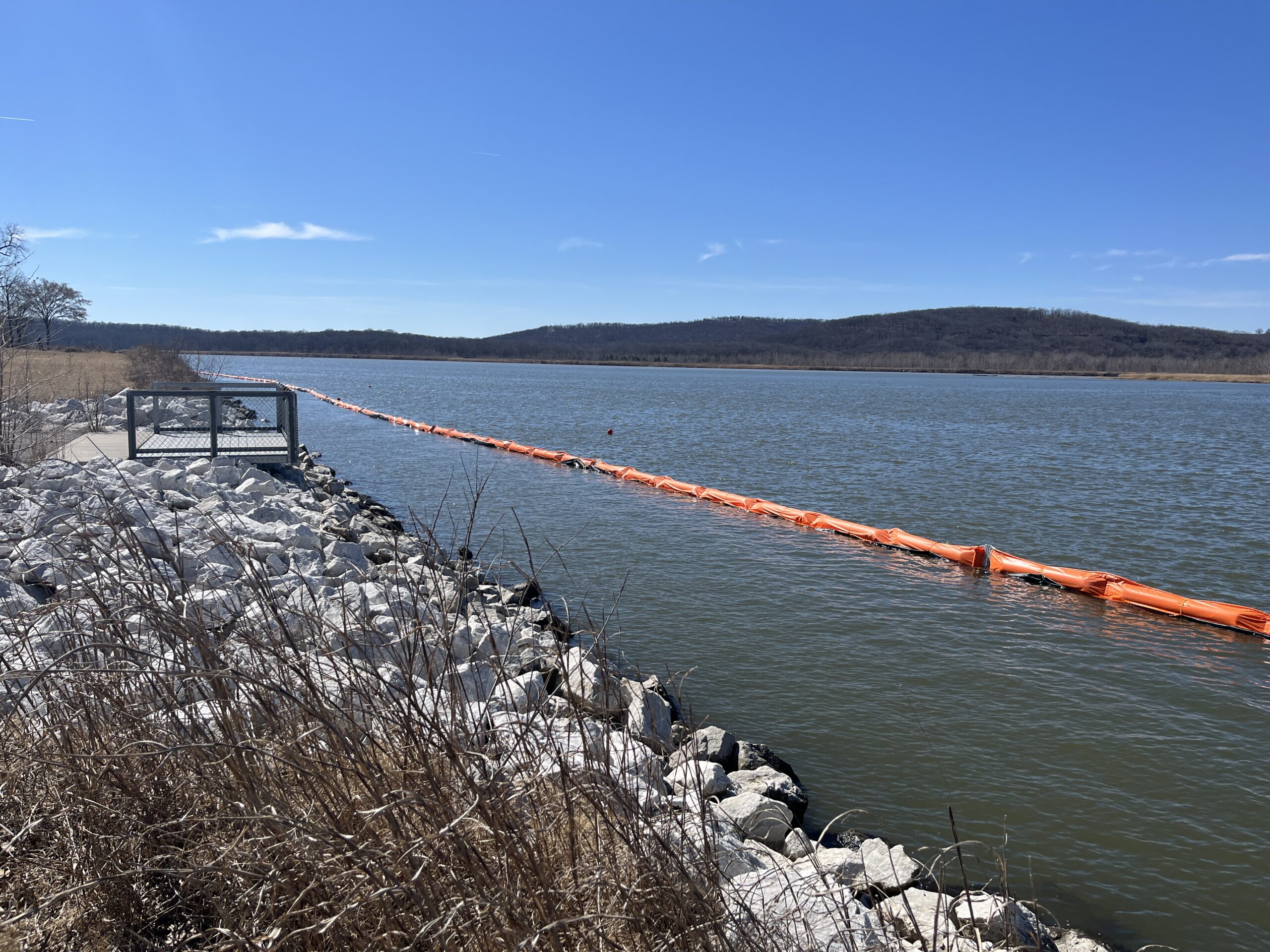
ACME Turbidity Curtain installed in a lake near a construction zone
Even the highest-quality containment equipment can fail if improperly deployed, which is why successful waterway protection depends not only on the products themselves but on a thorough understanding of the environmental conditions in which they will operate. Before any system enters the water, experienced responders evaluate a range of site-specific variables, including water depth, current velocity, wind exposure, sediment load, wave action, and expected project duration. These factors directly affect every decision that follows, from equipment selection and skirt depth to anchoring strategy and section configuration. Skipping or underestimating this assessment phase is one of the most common causes of containment failure in the field, and the consequences can be significant. Improper installation can lead to system collapse and failure, excessive arcing, or total containment failure. In fast-moving water, incorrectly anchored systems may drift, rotate, or become overstressed, reducing their effectiveness and potentially creating additional hazards for crews and the surrounding environment.
View the following deployment brochures for Containment Boom and Turbidity Curtains to learn more about proper deployment and the tips and tricks we expertly suggest.
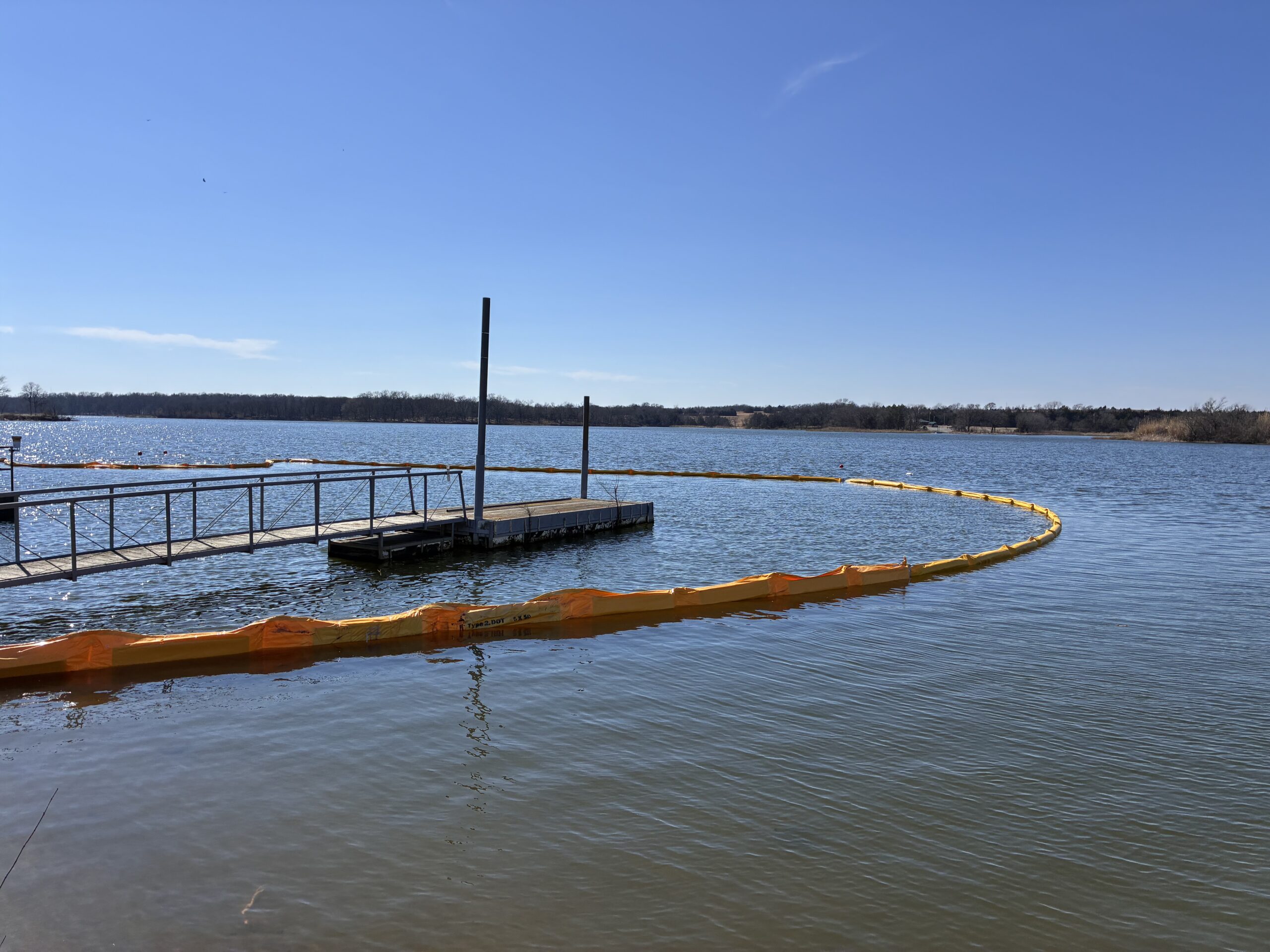
ACME Turbidity Curtain that had just been deployed and anchored in a large lake in Oklahoma
Selecting the right containment system and deploying it correctly are decisions that carry real consequences, and today, digital technology is making both significantly more reliable. At ACME Environmental, advanced digital tools work hand in hand with physical containment systems to improve planning accuracy, accelerate response times, and reduce the risk of equipment failure in the field. One of the most powerful tools in ACME’s digital arsenal is the 3-Dimensional Action Plan, or 3DAP, which offers advanced visualization tools that support pre-planning through 3D mapping for spill preparedness by simulating complex scenarios and embedding 3D models of the facilities/areas that could be affected. Before a single section of boom or turbidity curtain enters the water, teams can use 3DAP to virtually walk through an incident scenario, identify the highest-risk areas along a waterway, and determine the optimal placement and configuration of containment equipment. Dynamic aerial footage provides accurate on-the-ground perspectives, while 3D modeling delivers site-specific insights, allowing teams to adjust their plans before an emergency arises. This level of pre-incident visualization directly addresses one of the most common causes of containment failure: not knowing site conditions before deployment begins. To learn more about these digital tools, read this article.
Once a response is underway, ACME’s real-time digital dashboard integrates multiple data streams from both public and private data sets, providing a unified interface that enhances situational awareness. Response teams, contractors, regulatory bodies, and management can all access the same live information from their computers or phones, ensuring that equipment selection and deployment decisions are based on current, accurate conditions rather than assumptions. Access to real-time data increases response times, improving emergency operations’ overall coordination and efficiency and ensuring that incidents are managed effectively with precision and control. The result of combining physical expertise with digital precision is a more informed, more coordinated, and ultimately more effective response. Whether the goal is pre-planning a turbidity curtain deployment around a long-term dredging project or rapidly containing an active fuel spill in a marina, digital tools ensure that the right equipment reaches the right location, deployed the right way, from the very first moment of response.
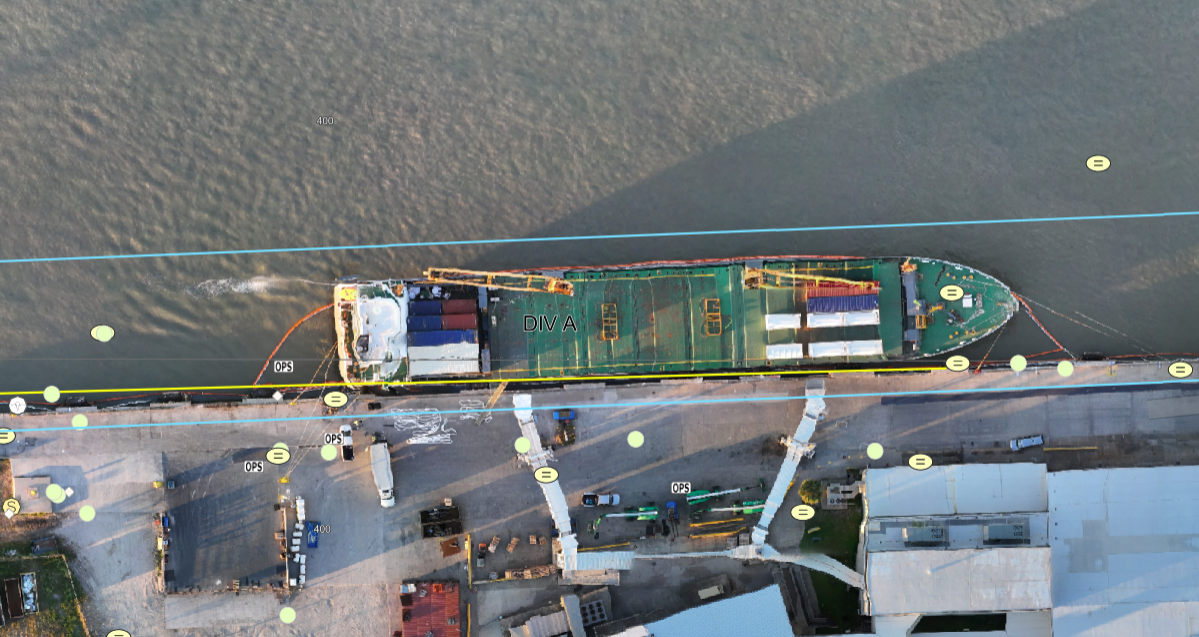
Drone footage of a spill caused by a cargo ship scrapping its oil reserves against a dock
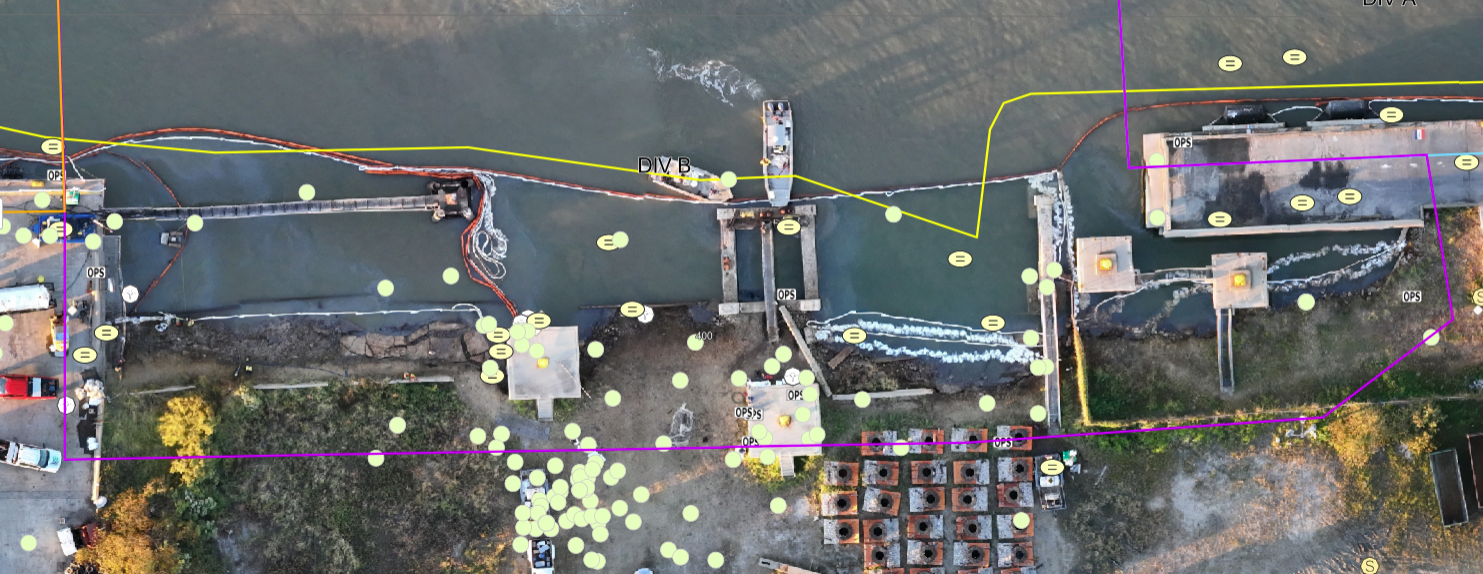
Drone footage of ongoing clean up operations around the dock
Waterway contamination and sediment migration can escalate rapidly if not properly managed. Whether you’re dealing with an active oil spill or conducting dredging operations, effective containment systems are crucial for protecting both the environment and the success of your project.
Containment boom and turbidity curtains are proven solutions for controlling contaminants before they spread. When selected and deployed correctly, these systems minimize environmental impact, enhance operational efficiency, and ensure compliance with regulatory standards across various marine and shoreline applications. With extensive manufacturing capabilities, field experience, and environmental expertise, ACME Environmental is dedicated to providing reliable containment solutions for demanding waterway projects nationwide.
Contact ACME Environmental to discuss your project needs and ensure the protection of our natural resources. Together, we can create a lasting impact on environmental sustainability and project success. Don’t wait, let’s work towards a safer future for our waterways!

Posted on: September 11, 2026
What Are Vacuum Truck Services? Some people who need vacuum truck services may never have considered it or may not...
Read More
Posted on: September 1, 2026
Now What? When cleanup crews leave the site and the last bit of impacted soil is “removed”, it’s tempting to...
Read More
Posted on: August 3, 2026
The Cost of Waiting Too Long When an oil or chemical spill occurs, every minute counts. What may begin as...
Read More
Posted on: June 19, 2026
Why Preparation Matters When severe weather strikes, industrial facilities face risks that extend far beyond structural damage and operational downtime....
Read More