


ACME’s Vacuum Truck Services
What Are Vacuum Truck Services? Some people who need vacuum truck services may never have considered it or may not...
Read MoreAs coastal communities from the Gulf of Mexico to the Caribbean continue to face large amounts of Sargassum washing up on their shorelines, effective planning and mitigation solutions have never been more critical. Sargassum, a naturally occurring brown macroalgae, plays a vital ecological role in the ocean, serving as an essential habitat for fish and sea turtles and providing shelter for various marine species. Federal agencies like the National Oceanic and Atmospheric Administration (NOAA) and the U.S. Environmental Protection Agency (EPA) acknowledge its ecological benefits in marine environments. However, when large mats of Sargassum are brought ashore by wind and currents, they can quickly transform into significant environmental, economic, and public health challenges.
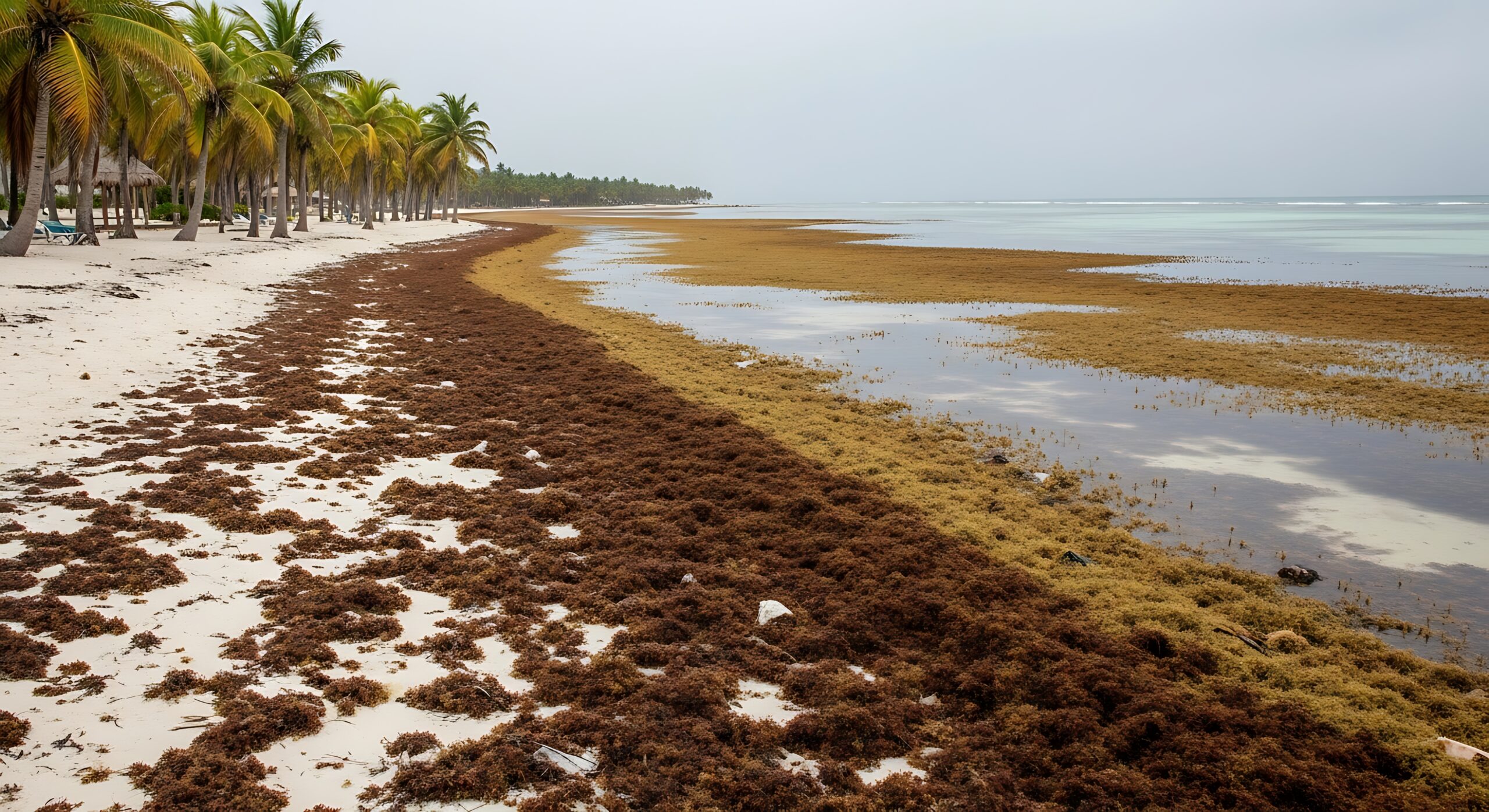
A beach completely covered in Sargassum
Sargassum Inundation Events occur when large clumps of the algae wash up on beaches and nearshore waters. Federal research has documented that decomposition of excessive Sargassum releases hydrogen sulfide and ammonia, leading to unpleasant odors and potential respiratory issues for people near shorelines and even possible neurological issues in marine animals. These events also contribute to declines in water quality and can smother critical habitats like coral reefs. Economically, these impacts extend to both tourism and fishing industries by deterring beachgoers, clogging fishing gear, and increasing municipal cleanup costs. These effects have been observed across the tropical Atlantic, Gulf of Mexico, and Caribbean regions, prompting federal agencies and local authorities to enhance monitoring and response strategies. NOAA’s CoastWatch and other federal monitoring initiatives now produce Sargassum Inundation Risk reports (SIR) to help coastal communities prepare by identifying likely areas of impact before mats make landfall. This early warning information is critical for proactive planning and response operations.
To help coastal communities stay ahead of these invasions, ACME Environmental has developed the Seaweed Stopper Containment Boom, a specialty boom engineered to intercept and contain seaweed offshore before it reaches shorelines.
This proactive containment approach not only minimizes the volume of seaweed reaching the beach but also allows cleanup crews to work more efficiently and effectively. The result is better protection for coastal environments, reduced disruption to local economies, and a faster, more controlled response when Sargassum Inundation Events occur.

ACME Environmental’s Seaweed Stopper Containment Boom
By deploying this boom ahead of predicted Sargassum invasions, communities gain a powerful, proactive advantage. Instead of reacting after the fact, they can intercept and redirect seaweed offshore before it ever reaches the shoreline. This early deployment strategy reduces the volume of Sargassum that accumulates on beaches, cutting down on the need for costly, labor-intensive cleanup efforts. More importantly, it helps preserve recreational water quality, protect tourism-driven revenue, and maintain the overall health and usability of coastal environments.
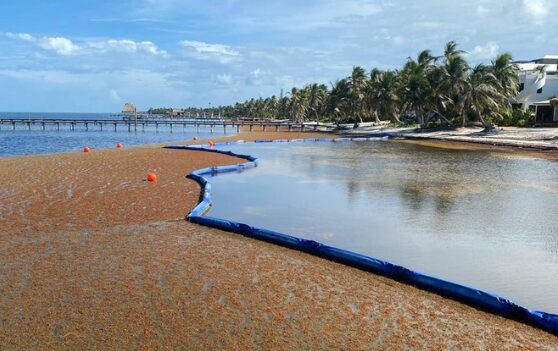
Seaweed boom deployed around a beach to keep it clean
Effective planning starts well before Sargassum reaches the coast, beginning with the early identification of high-risk zones. This allows containment booms to be strategically positioned in advance, stopping or redirecting Sargassum mats before they make landfall. When paired with coordination among tourism boards, municipalities, port authorities, and other local stakeholders, these efforts become significantly more effective and fully integrated into broader coastal resilience and response strategies.
Acting before an event occurs is the key differentiator between reactive cleanup and true coastal protection. This approach not only helps safeguard sensitive marine and shoreline ecosystems but also plays a critical role in protecting the economic stability of tourism, commercial fisheries, and waterfront businesses that are often heavily impacted by large-scale Sargassum Inundation Events.

Posted on: September 11, 2026
What Are Vacuum Truck Services? Some people who need vacuum truck services may never have considered it or may not...
Read More
Posted on: September 1, 2026
Now What? When cleanup crews leave the site and the last bit of impacted soil is “removed”, it’s tempting to...
Read More
Posted on: August 3, 2026
The Cost of Waiting Too Long When an oil or chemical spill occurs, every minute counts. What may begin as...
Read More
Posted on: June 19, 2026
Why Preparation Matters When severe weather strikes, industrial facilities face risks that extend far beyond structural damage and operational downtime....
Read More