


ACME’s Vacuum Truck Services
What Are Vacuum Truck Services? Some people who need vacuum truck services may never have considered it or may not...
Read MoreWhen an oil or chemical spill occurs, every minute counts. What may begin as a small, localized release can quickly escalate into an environmental emergency with significant consequences. While most facilities recognize the importance of spill response, many underestimate how rapidly contaminants can spread and how dramatically cleanup costs increase when response efforts are delayed. The reality is straightforward: the faster a spill is contained and recovered, the lower its overall impact. Rapid deployment of containment boom, oil skimmers, vacuum trucks, sorbents, and trained response personnel can prevent a manageable incident from becoming a weeks-or months-long project.
At ACME, we understand that the first hour after a spill is crucial in shaping the outcome. That’s why we urge you to act swiftly in any spill situation. Our expert team is ready to assist you in making informed decisions and taking immediate action to minimize environmental damage and reduce cleanup costs.
Don’t wait; contact ACME today to ensure you’re prepared and equipped to handle spills effectively. Together, we can protect our environment and create a cleaner future.
As contamination spreads, response efforts become significantly more complex and costly. What could have been resolved through rapid containment can quickly escalate into a large-scale response project. Instead of simply deploying an on-hand containment boom system and recovering the released product, responders may need to excavate, transport, and dispose of contaminated soil, treat impacted surface water or groundwater, conduct long-term environmental monitoring, and restore damaged habitats. Each additional phase requires more time, labor, specialized equipment, and regulatory oversight, driving cleanup costs higher and extending the time it takes to clean up.
Ultimately, what might have been resolved through a rapid, well-coordinated response can evolve into a lengthy, resource-intensive cleanup that takes longer to complete, and costs much more than what immediate action would have required.
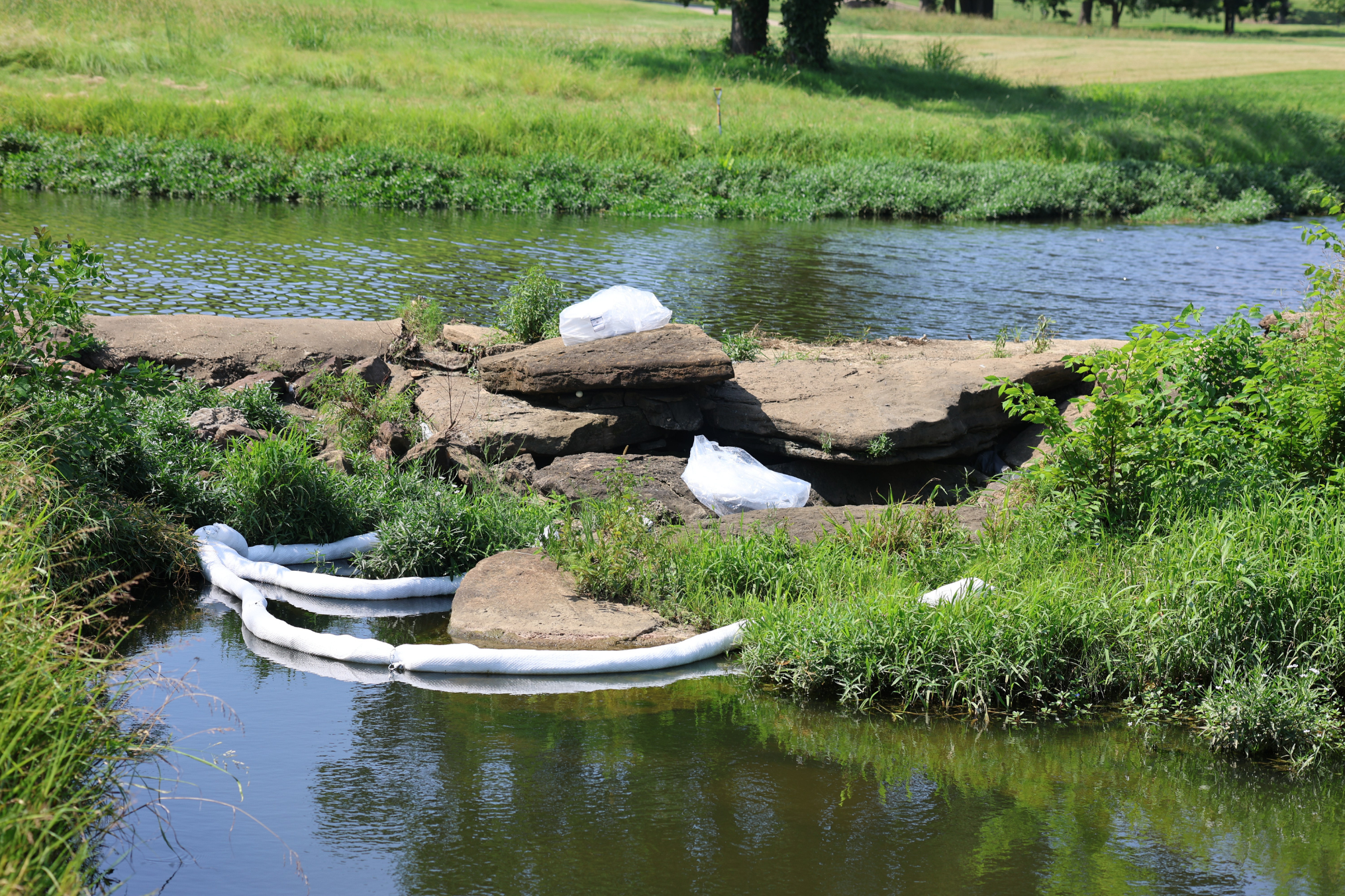
ACME Environmental’s Sorbent Boom deployed as a second line of defense to prevent diesel fuel from spilling into a creek with 2 bales of Sorbent Pads on hand
Environmental regulations impose strict reporting and cleanup obligations on facilities. Delays in containment and recovery efforts can increase exposure to enforcement actions, cleanup orders, and financial liability. Under the Oil Pollution Act of 1990, responsible parties are generally liable for cleanup costs, environmental damage assessments, and restoration activities resulting from an oil spill.
Beyond regulatory penalties, organizations may also experience:
For many businesses, these indirect costs can exceed the cost of the cleanup itself. This is why preparedness and immediate response are not simply operational best practices; they are essential risk management strategies that protect both the environment and an organization’s bottom line. Investing in emergency response planning, oil spill equipment, and rapid deployment capabilities before an incident occurs is almost always far less expensive than managing the long-term consequences of a delayed response.
Containment boom remains one of the most effective pieces of oil spill equipment for protecting waterways from oil and chemical spills. When deployed quickly and properly, it serves as the first line of defense by limiting the spread of contaminants and creating a controlled area for recovery operations.
Effective containment boom deployment can:
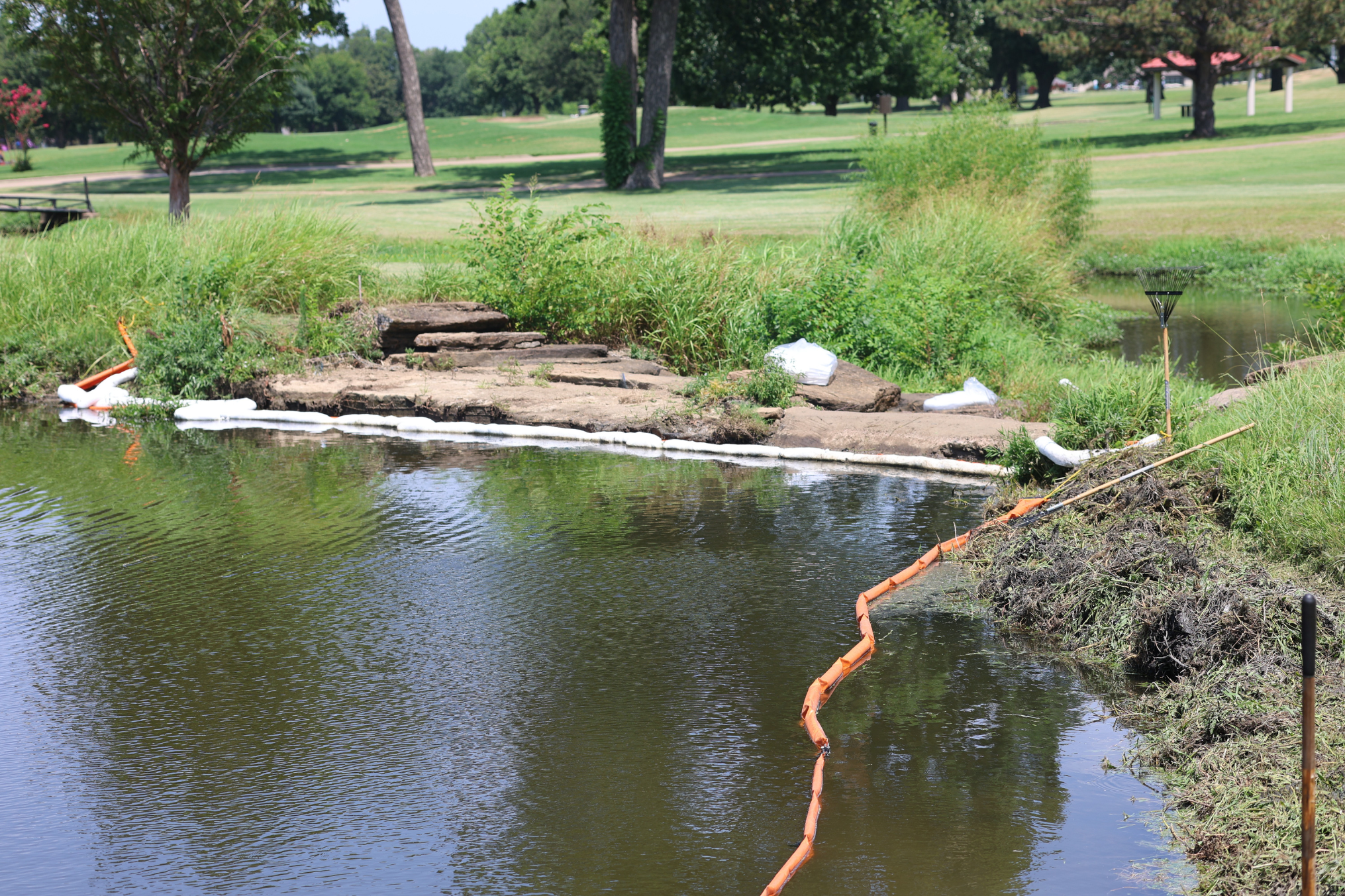
ACME Environmental’s Sorbent Boom and Mini Boom deployed to keep diesel fuel from escaping a pond and spilling into a creek with 2 bales of Sorbent Pads on hand
By containing a spill early, responders can significantly reduce environmental damage, simplify recovery efforts, and lower overall cleanup costs. However, successful containment depends on selecting the right containment boom for the conditions and deploying it properly. Every spill presents unique challenges, and rivers, lakes, ponds, marinas, ports, and coastal waters each require different boom configurations based on currents, wind, wave action, debris, and depth. Using the wrong containment boom, or deploying it improperly, can allow contaminants to spread beyond the initial release area.
That’s why preparation is essential. When a spill occurs, there isn’t time to evaluate equipment options or wait for supplies to arrive. Having the appropriate containment boom staged and ready for immediate deployment can make the difference between a localized recovery effort and a large-scale remediation project. ACME Environmental manufactures a comprehensive line of containment boom systems engineered for rapid deployment and dependable performance across a wide range of environments. From inland waterways and fast-moving rivers to industrial facilities and permanent floating barrier applications, our containment solutions are designed to help organizations respond quickly, protect valuable natural resources, and minimize cleanup costs.
Contact ACME today to identify the right containment boom for your facility and strengthen your spill response readiness before or even during an emergency event.
Containment is only the first step in an effective spill response. Once the spread of contaminants has been controlled, recovery operations begin, and this is where every gallon matters. Oil skimmers and vacuum trucks work together to remove contaminants before they can disperse further or infiltrate surrounding soils, groundwater, and sensitive environments.
Effective recovery operations can:
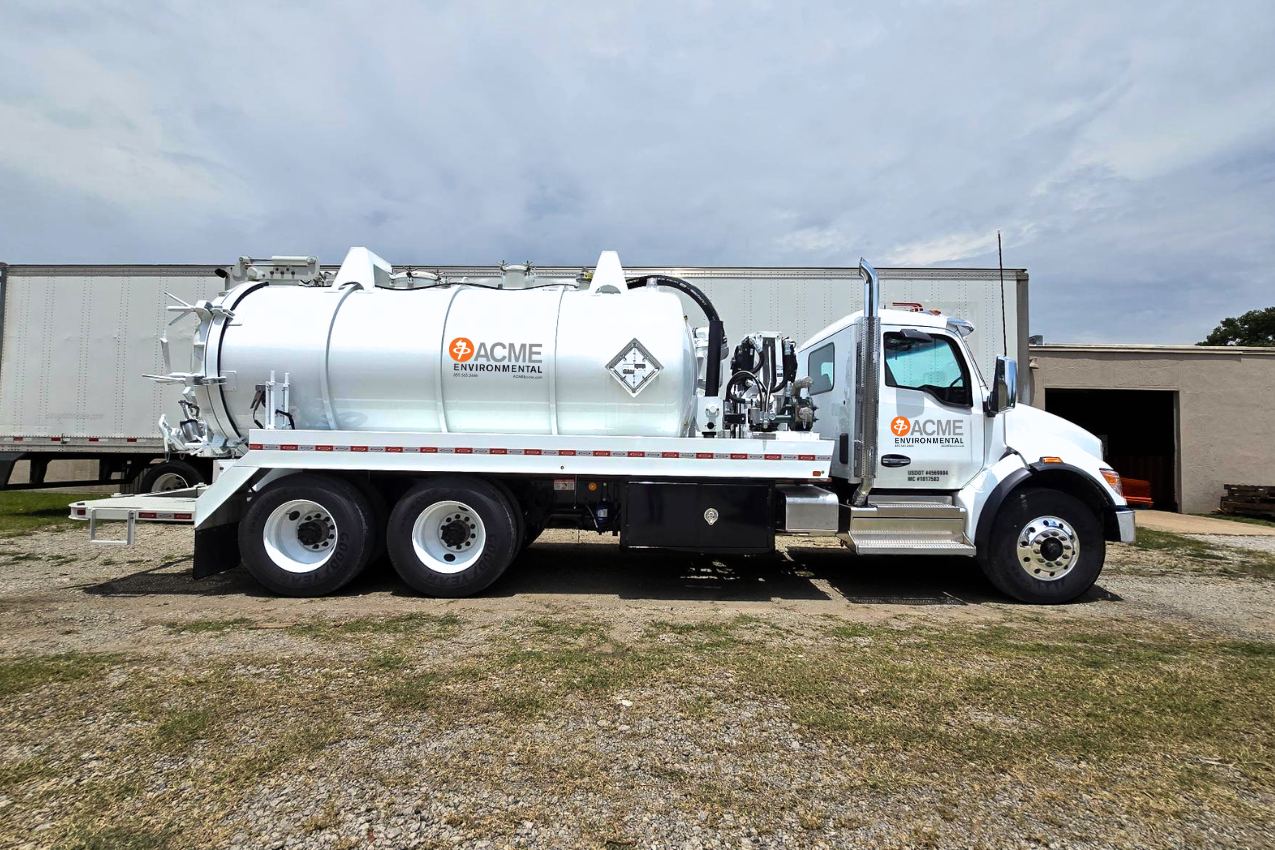
ACME Environmental’s Vacuum Truck that will be mobilized in the first few weeks of August
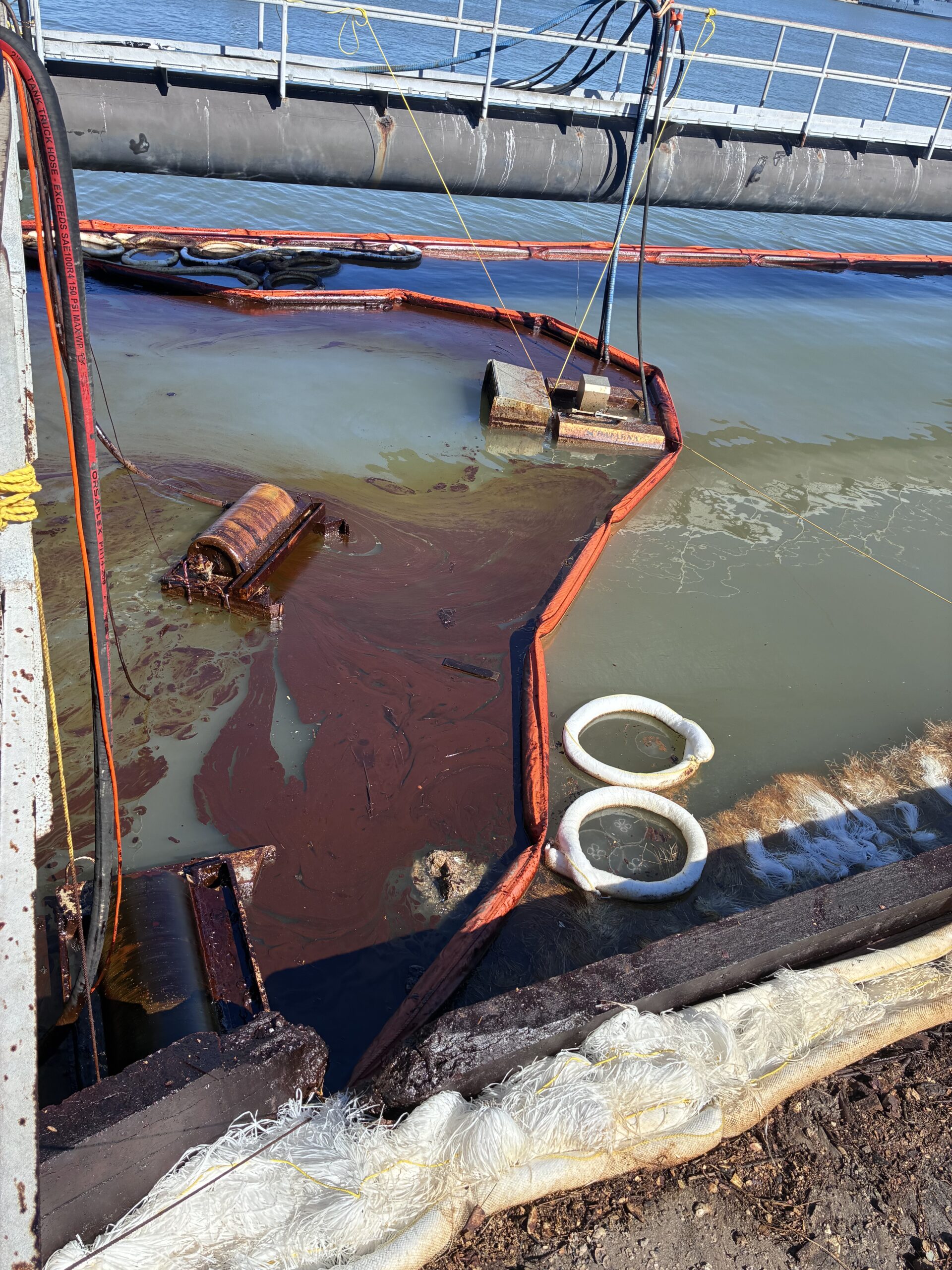
Containment Boom, Sorbent Boom, and Oil Skimmers containing/recovering an oil spill
Every gallon recovered during this phase is one less gallon that must later be excavated from contaminated soil, pumped from groundwater, or cleaned from shorelines. That’s why preparedness is just as important for recovery equipment as it is for containment. When a spill occurs, responders need immediate access to reliable skimmers, vacuum trucks, and trained personnel capable of recovering as quickly as possible. ACME Environmental maintains a fleet of spill response equipment, including containment boom, sorbent material, oil skimmers, a vacuum truck, and experienced response teams ready for rapid deployment. Whether supporting inland waterways, industrial facilities, pipelines, terminals, or emergency spill responses, ACME provides the equipment and expertise needed to maximize product recovery, minimize environmental damage, and reduce overall cleanup costs.
Contact ACME today to strengthen your spill response capabilities and ensure you’re prepared to recover product quickly when every minute and gallon counts.
Below are two spill scenarios that highlight both the positive and the negative actions taken by responders. Each scenario not only illustrates an incident but also serves as a good reminder of the importance of preparedness in emergency situations. Understanding these lessons can make all the difference in effectively managing spills and safeguarding our environment.
An industrial facility has invested in spill response planning, personnel training, and readily accessible equipment. When a storage tank releases product, operators immediately activate their emergency response plan by contacting their on-call Oil Spill Removal Organization (OSRO). Containment boom is deployed within an hour, preventing the release from spreading beyond the immediate area. Oil skimmers begin recovering floating products, while vacuum trucks remove contaminated liquids before they can migrate into drainage systems or surrounding soils. Because the facility was prepared, most of the released product is recovered before it becomes widespread contamination. Cleanup is completed within days, environmental impacts are minimized, and the facility quickly returns to normal operations.
In this scenario, the same volume of product is released under comparable conditions, yet the facility is caught off guard. There’s no containment boom readily available, the operators lack training in how to deploy it, and the facility’s on-call Oil Spill Removal Organization (OSRO) isn’t contacted immediately. As a result, rainfall washes contaminants into storm drains and nearby waterways, while hydrocarbons seep into the surrounding soil and pose a threat to groundwater. What should have been a straightforward cleanup turns into a complicated remediation project that may take weeks, months, or even years. Responders are forced to excavate and transport contaminated soil, conduct thorough environmental sampling, and carry out long-term monitoring under regulatory oversight.
The spill volume was identical. The cleanup costs were not. The difference wasn’t the size of the spill; it was the speed of the response, which relies solely on the preparation of the facility and its operators.
Facilities cannot predict when a spill will occur, but they can determine how prepared they will be when it does. Having a comprehensive response plan, trained personnel, and immediate access to response equipment allows organizations to contain and recover product before it spreads. Every minute of delay causes more issues.
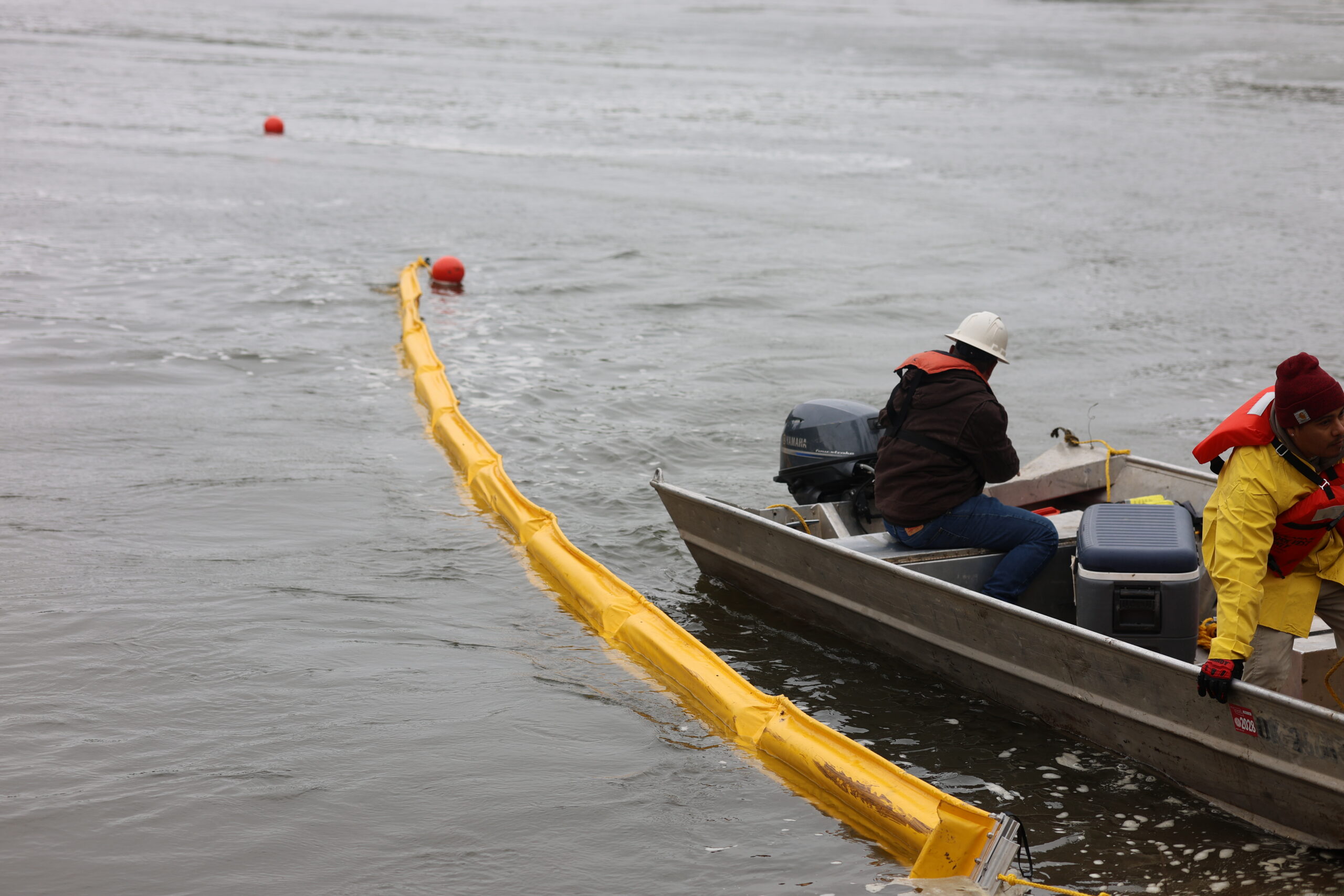
Students in ACME’s annual Boom School practicing boom deployment techniques
Effective spill response depends on more than reacting to an emergency. It requires preparation, reliable equipment, and an experienced response partner. ACME Environmental helps organizations strengthen their spill response capabilities before or even during an incident. As a United States Coast Guard (USCG) designated #0010 Oil Spill Removal Organization (OSRO), ACME is confident that we can help you when you need it most. ACME delivers comprehensive solutions designed to help clients contain spills quickly, recover product efficiently, and minimize environmental and financial impacts. Whether you’re building a spill preparedness program or responding to an active release, ACME has the equipment, expertise, and personnel to support every stage of the response.
Contact ACME today to learn how we can help protect your facility, your operations, and the environment.
https://acmeboom.com/articles/oil-spill-response-land-vs-water/
https://acmeboom.com/articles/fall-2025-boom-school-preparing-in-advance/
https://acmeboom.com/case-studies/acme-in-action-northern-oklahoma-oil-spill/
https://acmeboom.com/services/oil-spill-response/
https://acmeboom.com/services/site-maintenance-and-restoration/
https://acmeboom.com/resources/oil-spill-categories/
https://acmeboom.com/resources/oil-spill-glossary/
https://acmeboom.com/articles/oil-spill-preparations-preparedness/

Posted on: September 11, 2026
What Are Vacuum Truck Services? Some people who need vacuum truck services may never have considered it or may not...
Read More
Posted on: September 1, 2026
Now What? When cleanup crews leave the site and the last bit of impacted soil is “removed”, it’s tempting to...
Read More
Posted on: June 19, 2026
Why Preparation Matters When severe weather strikes, industrial facilities face risks that extend far beyond structural damage and operational downtime....
Read More
Posted on: May 12, 2026
Proactive Waterway Protection Protecting waterways during construction, dredging, remediation, and spill-response operations requires more than simply reacting to contamination after...
Read More